




 Energy

Anti-Tesla demonstration tests Tesla Full Self-Driving tech
The Dawn Project has been testing Tesla’s self-driving technology for several years and says the company’s vehicles failed to slow or stop around school buses, according to Arthur Maltin, a project coordinator with the organization. The organization has previously run full-page ads in the New York Times and aired commercials during the Super Bowl criticizing Tesla’s technology. Now, it is turning to live demonstrations.
In collaboration with Resist Austin and Tesla Takedown, the organization staged a live demonstration Thursday in Austin’s Mueller neighborhood.
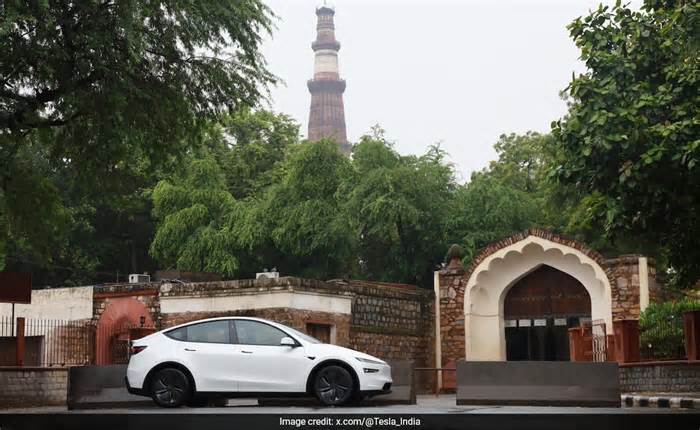
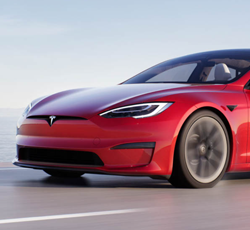
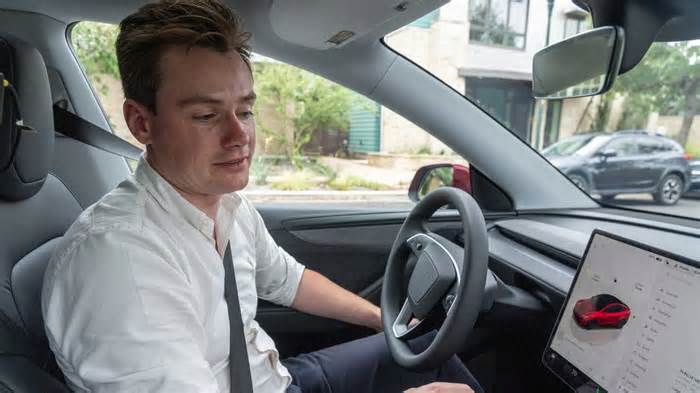
Maltin and his team took advantage of Tesla’s overnight test drive offer, which allows prospective customers to try out a new Tesla for up to 48 hours. The vehicle was reportedly a new Tesla Model Y equipped with the company’s latest FSD capabilities.
Maltin sat in the driver’s seat but reportedly did not use the wheel or pedals. He entered a route for the vehicle to circle the neighborhood and pass by a school bus the Dawn Project rented. It flashed lights and stop signs, which signal passing cars to stop for crossing pedestrians. When the Tesla passed by, a Dawn Project volunteer pulled a child-sized dummy into the road.
In all eight tests, the self-driving Tesla did not slow as it approached the bus, struck the child-sized dummy and continued driving.
Members of the media and general public took turns riding in the vehicle during the tests to see for themselves how the Tesla would react to the bus and child-sized dummy. Other cars, bikers and runners were also on the road and the Tesla did not cause any incidents in those cases.
After the tests, Maltin said it’s critical that residents and lawmakers in Austin understand that Tesla’s robotaxis are not safe enough to be fully autonomous.
“(Tesla’s) the most egregious example of safety critical systems,” he said. “Most safety-critical software is developed with processes that means that there’s a checklist of things you do before you release it to the public. Tesla is throwing caution to the wind and putting the public at risk by deploying their software.”
Expert says Tesla robotaxis have potential to lead autonomous vehicle market
Tesla is currently testing its robotaxis in Austin. The modified versions of its Model Y vehicles equipped with Full Self-Driving technology, currently include a “supervised” driver in the vehicle.
Tesla’s self-driving system was introduced several years ago and intended for use with a driver who remains attentive and ready to intervene when necessary. The technology has been associated with crashes, including a fatal wreck in November 2023, when a woman who stepped into the road to direct traffic around an accident was struck by a Tesla Model Y in self-driving mode.
Tesla is not the only autonomous vehicle company to be involved in major accidents.
General Motors Co. ended its robotaxi development arm, Cruise, after it continually lost money and was involved in a major 2023 crash in which a pedestrian was struck and dragged for 20 feet. Amazon’s Zoox issued a voluntary recall and paused testing earlier this year after one of its autonomous vehicles was involved in a crash in Las Vegas. The robotaxi was unoccupied at the time. Google’s Waymo also recalled some of its vehicles at the end of last year to update software after some of its vehicles were involved in minor collisions. The recall occurred before Waymo launched in partnership with Uber in Austin. Waymo vehicles have not been found at fault for a major collision resulting in injury or death and are now deployed in major cities including Austin, San Francisco and Los Angeles.
Tesla’s technology, however, is different from that in other robotaxis. Tesla relies on cameras and machine learning for its self-driving system, whereas other companies use cameras, machine learning and lidar, which are lasers, and radar to provide more input.
Musk has previously called lidar a “fool’s errand” and that anyone relying on it is “doomed” because they are expensive and “unnecessary.”
Tesla’s camera-based approach, in theory, allows Tesla to scale its autonomous fleet more quickly and cost-effectively while maintaining a sleek design. In comparison, Waymo vehicles, which can be spotted across Austin today, are equipped with prominent sensors on their tops and sides, which are constantly active and give the cars a bulkier appearance.
“The issue with Waymo’s car is it costs way more money,” Musk said earlier this year. “Their car is very expensive, made in low volume. Teslas probably cost 25% or 20% of what a Waymo costs and are made in very high volume.”
Ken Johnston, an artificial intelligence and data expert at Seattle-based technology consultant Envorso, has been tracking self-driving vehicles for several years. If Tesla can prove its tech is as safe as other companies’, he said, it will take over the autonomous vehicle space.
“It comes down to safety,” the former Ford Motor Co. executive said. “It’s safety more than anything. If they have major incidents, then it’s going to set not just them, but it’ll set everybody in the auto taxi space behind. If Tesla is actually successful at a reasonable scale in Austin, with that brand and the install base they have, it changes the conversation almost instantly. You now enter the question of scale, and that’s where niche players like Waymo and some of the others struggle because they can’t get to scale in time.”
Please first to comment



Stay Connected
Tweets by elonmuskTo get the latest tweets please make sure you are logged in on X on this browser.