





 Energy




— NSF – NASASpaceflight.com (@NASASpaceflight) June 19, 2025
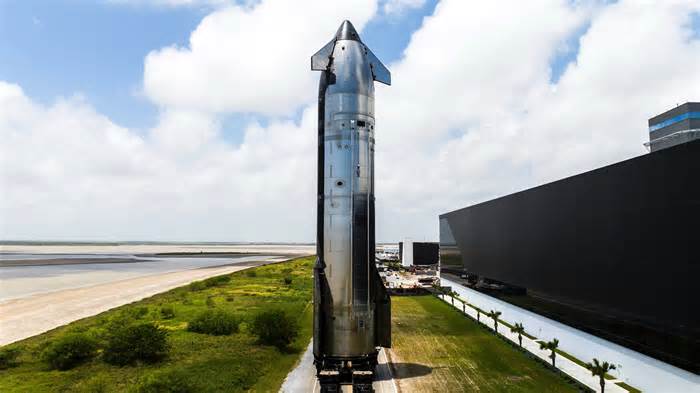
“On Wednesday, June 18 at approximately 11 p.m. CT, the Starship preparing for the tenth flight test experienced a major anomaly while on a test stand at Starbase,” SpaceX said in a statement about 90 minutes after the incident. “A safety clear area around the site was maintained throughout the operation and all personnel are safe and accounted for.”
COMING SOON: A new email series explaining the Golden Dome initiative, what it means for the space industry and breaking down the latest developments. Sign up now to receive the first edition when the series launches.
Sign up
By submitting this form, you agree to the SpaceNews privacy policy and terms and conditions and to receive email from us and our partners. You can opt-out at any time.
The company added it was working to safe the test site in cooperation with local officials and that there were no hazards for people in the area.
SpaceX provided no other details about the explosion. It took place as Ship 36 was being prepared for a static-fire test. However, the explosion occurred before the vehicle ignited its Raptor engines.
The explosion appeared to start at the top of the vehicle, suggesting a failure of header tanks located there. A cloud of condensation appears at the top of the vehicle just before the explosion, which could be evidence of a tank failure.
The explosion deals another setback to SpaceX’s development of the Starship vehicle. Ship 36 was planned to be the upper stage for the next Starship test flight, known as Flight 10. A Federal Aviation Administration advisory June 18 indicated that Flight 10 could launch as soon as June 29, although SpaceX would still require approvals from the FAA before attempting a launch.
The last three Starship flights, all using an upgraded version of the Starship upper stage or “ship”, suffered failures involving the ship. On Flight 7 in January, a harmonic response much stronger than expected stressed elements of the ship’s propulsion system, causing propellant leaks that fed fires. The Flight 8 launch in March failed at almost the same phase of the vehicle’s ascent, but this time because of an unspecified hardware failure in a Raptor engine that caused several other engines to fail.
The most recent launch, Flight 9 on May 27, completed its ascent, avoiding the problems from the previous flights. However, the vehicle suffered a propellant leak that led to a loss of attitude control and an uncontrolled reentry that destroyed the ship. SpaceX has not provided additional details about the failure since that flight.
The test stand explosion raises new worries about the development of Starship. Before the string of failures that started with Flight 7, SpaceX appeared to be making steady progress, getting the ship through reentry to a soft splashdown in the Indian Ocean. The Super Heavy booster has also matured and, on three launches, successfully returned to the launch site to be “caught” by arms on the launch tower.
One industry official at the Paris Air Show, speaking on background June 19 after watching video of the explosion, argued that SpaceX’s development of Starship appeared to be regressing, noting that such explosions were last seen several years ago, well before the first integrated Starship/Super Heavy test flight.
Related
Please first to comment





Stay Connected
Tweets by elonmuskTo get the latest tweets please make sure you are logged in on X on this browser.