




 Energy


15 Jul 2025, 09:38 PM IST
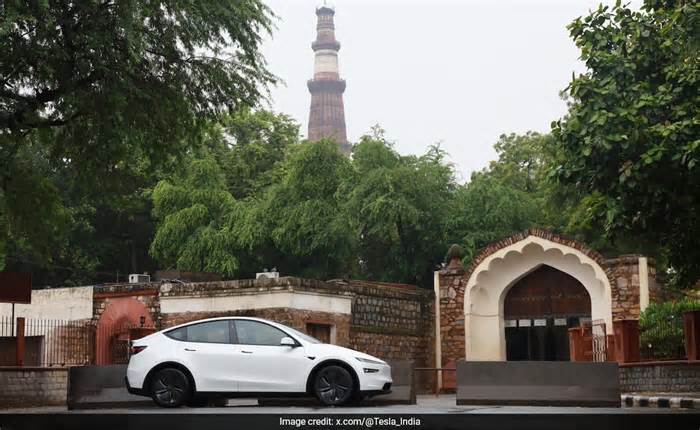
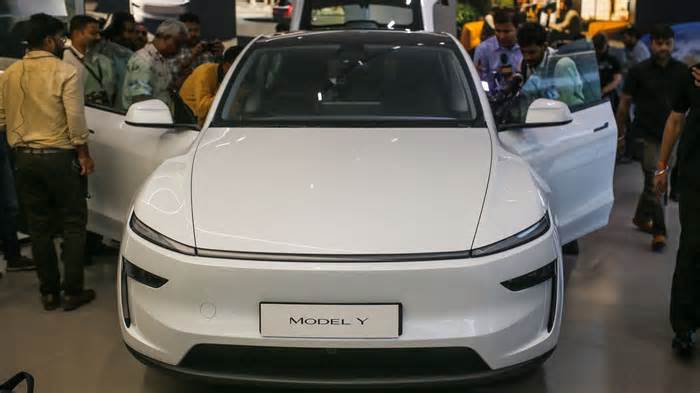
Members of the media around a Tesla Model Y automobile at the company's newly opened store at Bandra Kurla Complex (BKC) in Mumbai on Tuesday, July 15, 2025. (Photo: Dhiraj Singh/Bloomberg)(Bloomberg)
After years of speculation, Tesla — the world’s second-largest EV maker and arguably its most talked-about brand — has finally arrived in India. Tesla India is now a wholly owned subsidiary of Tesla Inc, with its first showroom opening in Mumbai’s BKC district. Here’s everything you need to know.
For now, only the Model Y is on offer
Despite much anticipation around the Model 3 (Tesla’s most affordable car globally), Tesla has chosen to debut in India with the Model Y. Built on the same platform as the Model 3, the Model Y offers higher ground clearance and a more SUV-like stance, making it better suited for Indian roads. The Model 3, however, is expected to arrive later this year.
Check similar cars Also Read: Tesla Launch in India Highlights: Elon Musk's EV giant enters India — Check which cars are available, and for how much…
However, FSD remains a controversial promise. In India, these features are still awaiting regulatory approvals, and there’s no confirmed timeline. For now, FSD is an optional extra costing
₹
6 lakh and requires the driver to remain fully attentive and in control. Whether it can handle India’s chaotic driving conditions remains to be seen.
It must be noted that FSD or Full Self-Driving is a misnomer as it mandates that a driver be present and in control of the vehicle at all times. This is largely for regulatory reasons, as driverless capabilities are still not authorised in the US. However, the Full-Self Driving suite – the one that allows a Tesla to navigate past dense traffic, overtake and even change lanes at will, isn’t authorised anywhere in Europe. European regulators, including the EU’s UNECE (United Nations Economic Commission for Europe), have strict homologation rules and safety standards for automated driving. Current legislation does not allow higher-level autonomy (Level 3 and beyond) on public roads without extensive testing and specific country-level approvals.
Much like Europe, India’s legal framework also hasn’t been tweaked to accommodate liability disputes in the case of software error from the car. And the distinguishing factor of Level 3 ADAS is that the car is likely to be held accountable instead of the driver. In a country with the highest number of road fatalities, Tesla’s FSD faces an uphill battle when it comes to regulatory approval, as the population density and generally chaotic driving conditions can overwhelm the system or put it in a state of action paralysis when faced with a slow-moving or immovable obstruction. India’s narrow bylanes may prove to be particularly challenging.
The many false promises of Tesla
Tesla has faced many hits in recent times, prompting the otherwise unrelenting Elon Musk to yield to India’s steep tariffs. However, its cars have been known to languish in development purgatory and the much-hyped, superlatively quick successor to the Roadster is just one such model. The other is the pared-down version of the Model Y, which is touted to be its cheapest model yet. Codenamed E41, the plan has already been pushed to next year, from earlier reports suggesting a launch in the third quarter of this year. It’s expected to cost 20 per cent less than the existing Model Y, according to Reuters. Even the beleaguered Cybertruck, originally scheduled to enter production in 2021, faced significant delays all the way up to 2023, when only a few people received delivery. Even now, full-scale mass production of the Cybertruck is a no-go with limited production.
Please first to comment



Stay Connected
Tweets by elonmuskTo get the latest tweets please make sure you are logged in on X on this browser.