




 Energy



Tesla and SpaceX
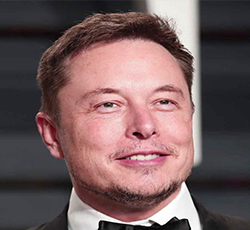
CEO Elon Musk added one more entry to his over-achiever resume on Thursday: construction magnate. During a media event in a cavernous and exceedingly empty train station constructed in the mid-aughts but never used, Chicago Mayor Rahm Emanuel formally announced that Muskâs tunnel boring and mass transit company has won its bid to build an 18-mile high-speed connector between downtown Chicago and OâHare International Airport. Musk says the boring company, called the Boring Company, will not use public funds for its project. (The Chicago Tribune reports the city will immediately enter negotiations with the company, with an official contract to emerge in about a month.)
By beating a consortium composed of investors, a fund launched by former NBA player Magic Johnson, and a British civil engineering firm, the Boring Company caps off a wild 18-month ride with its first official government bid win.
Yes, you heard that right: Only a year and a half ago, Musk joke-tweeted that he was done with LA trafficâand that he would buy a tunnel boring machine to dig his way out of the mess. A month later, he had purchased a used machine and started tunneling in the backyard of SpaceXâs Hawthorne, California, headquarters. Now heâs seeking regulatorsâ permissions to tunnel between Washington, DC, and New York, and throughout Los Angeles. One of Muskâs goals is to increase the speed of tunneling 15-fold (which would make a Boring Machine fast enough to beat his pet snail, Gary) and decrease its cost by a factor of ten.
âI think I have a track record of doing pretty tricky things,â Musk told reporters during the Chicago news conference.
The Chicago project just might be Muskâs trickiest and most ambitious project yet. The city has thus far declined to release the Boring Companyâs official bid, but it has laid out the ventureâs proposal in broad outlines. In just 12 minutes, 16-passenger pods traveling at speeds up to 150 mph would shuttle passengers between Block37, that empty train station constructed by Chicagoâs Transit Authority for $400 million, and OâHare International Airport. Today, the ride takes 45 minutes on the CTAâs Blue Line, and about 50 minutes by car.
The proposed system would carry 2,000 passengers in each direction per hour, for $20 or $25âhalf the price of an Uber ride. (The Blue Line, by contrast, costs up to $5 per airport ride, and carries 100,000 passengers per weekday1.) Pods would depart each station at 30-second to two-minute intervals. The company declined to discuss a particular route for the project, nor would it get specific about how it plans to pay for its operation and construction. But Musk told reporters he would like to get the whole thing done for less than $1 billion and start construction in three to four months.
To do that, the Boring Company will have to do some impressive calculator work. New Yorkâs 2-mile 2nd Avenue extension took about a century and $4.8 billion to construct. Replacing the 2-mile Alaskan Way Viaduct with an underground tunnel has taken seven years, and cost Seattle $2 billion and counting.
The Boring Company, which currently employs about 50 people, will also have to raise money. Thus far, Musk has himself invested almost $100 million in his company, with other investors pitching in about $10 million. The company has also sold 50,000 logoed hats at $20 each, plus 20,000 ânot-a-flamethrowers,â white and black branded roof torchers, at $500 each. During an event in Los Angeles last month, Musk said heâd also like to raise funds by selling life-size LEGO sets (perhaps the Temple of Horus?) made out of the debris extracted from his tunnels.
The companyâs first two experimental tunnel boring machines, nicknamed Godot and Linestorm, were purchased on the secondary market and have thus far been used in a test tunnel in Hawthorne. Another tunnel boring machine, this one equipped with new tech, will be called Prufrock.
But expertsâ prognoses on whether Musk can really ramp up tunneling speeds are mixed. Musk wants to make tunnel diameters smaller, to save money and time, and that could work, Marte Gutierrez, a professor of civil and environmental engineering at the Colorado School of Mines told WIRED last month, âThe cost of the tunnel goes up almost exponentially with the diameter,â he said. Others are more skeptical about his plans to speed up the tunnel wall building.
The permit process will be extensive, of course, though Musk specifically praised Chicagoâs relatively uncomplicated bureaucracy. The mayorâs office did not respond to queries about how the project would affect the CTA, or whether the CTA would be involved.
Still, Musk seemed pretty confident about the whole enterprise during his appearance with Mayor Emanuel. Kind of. âIf it works, great,â he reportedly said. âIf it doesnât, I guess my company is out a few billion dollars.â
1Story updated, 6/14/18, 5:45 PM EDT, with additional figures from the Chicago Transit Authority.
More Great WIRED Stories
Please first to comment

Stay Connected
Tweets by elonmuskTo get the latest tweets please make sure you are logged in on X on this browser.