




 Energy



Getty Images
Tesla’s program will operate in a very limited area of Austin and rely heavily on remote operators to minimize accidents, according to an executive with another autonomous tech company, based on conversations with Texas officials, who asked not to be identified as the matter isn’t public.
To back up the AI driving the vehicles, Tesla has also hired human staff to monitor and assist if they get into jams, taking full control if necessary. “As we iterate on the AI that powers them, we need the ability to access and control them remotely,” the company said in a posting for one such job. Alphabet Inc.’s Waymo, the leader in robotaxi tech, also uses remote operators to assist the vehicles by providing suggested solutions to tricky situations, but those people don’t actually drive them. Lag and latency in cellular networks make remote operations unsafe.
Limited Data
Along with limited tests, there’s a dearth of trustworthy data about how well Tesla’s self-driving software operates. The company does file occasional safety performance reports about the software, but it’s not peer-reviewed by outside technical experts and it frames the data as positively as possible, according to Goodall, a technical witness in a lawsuit against Tesla over the death of Walther Huang, killed in 2018 when his Model X slammed into a highway divider while running on Autopilot.
“With Full Self Driving, when they first started publishing numbers on that, they neglected to share that they’d only rolled the software out to drivers who had a very high safety score of 90 or above,” he said. “So of course the data showed it was safer, as your safest drivers were the only ones that had it.”
By contrast, Waymo frequently posts detailed reports on how its robotaxis are performing, claiming the data is peer-reviewed by experts.
Tesla also hasn’t yet shared details with the public about where in Austin it will offer its robotaxi service or exactly how it will operate. The city’s police and fire departments told Forbes the company contacted Austin’s Autonomous Vehicle Task Force, which includes their staff, and the city provided Tesla with “maps of schools and school zones; information about traffic control for special events; and information about our fire and police vehicles and procedures.”
But a request to see communications between Tesla and the city was denied. “The City of Austin is withholding responsive documents without a ruling from the Attorney General’s office, as permitted by law,” it said in an email. “All responsive information has been withheld due to 3rd party.”
The city didn’t respond to a question to confirm Tesla is that third party. The company, Musk and Ashok Elluswamy, head of Tesla’s autonomous vehicle program, didn’t respond to emails about the Austin rollout.
NHTSA this week requested details about Tesla’s Austin plans to understand how the vehicles perform in bad weather. It’s been investigating Tesla collisions involving Autopilot and FSD in poor visibility situations since last October. It’s not clear if the company has responded yet.
Tesla has had a permit to test autonomous vehicles in California for a decade, which requires companies to share safety data. Numerous competitors, including Waymo, Amazon’s Zoox, which hopes to operate robotaxis this year, Nuro and even Apple, which abandoned its program, have all submitted data on test miles logged including “disengagements”–when a human driver has to take over–as well as accident reports. Tesla hasn’t.
Not Just Driving
It’s hard to talk about Musk’s robotaxi dreams without comparing his approach to Waymo’s. The Alphabet unit has spent 16 years and billions of dollars trying to master every aspect of what a robotaxi has to do. Long before it gave its first paid rides to customers in Phoenix in 2018, the company tested intensely on public roads, privately at the “Castle,” its test facility at a decommissioned Air Force base in Central California, and with endless miles in virtual simulation to train its AI.
A Waymo robotaxi in San Francisco.
dpa/picture alliance via Getty Images
Recognizing that robotaxis aren’t just a technical challenge, it also recruited people from the airline industry and businesses specializing in customer service. For robotaxis to work, the cars have to be good at doing small things that can be tough to master but are critical, like picking up and dropping off passengers.
“We've been working on that for a long time,” said Chris Ludwick, director of Waymo’s product management team. “The first challenge with PUDO (the company’s shorthand for pickup, drop-off) is that when you get there, the on-road scene is going to be somewhat different each time. You may encounter construction or a stopped delivery truck or something like that. This leads to a whole suite of challenges of what do you do when you can't do the exact thing that you said to the rider when they requested the ride.”
That includes developing a sophisticated app to guide passengers to the safest, most convenient spots for them and other road users. “You can't just block traffic. That's unacceptable. If you do that the community gets upset,” Ludwick said. “There's just a lot of small details you have to get right.”
As far as safety, Waymo has avoided major accidents, injuries and fatalities so far, but its AI-enabled driver isn’t flawless. The company just recalled software in its fleet to fix a flaw that could cause vehicles to hit chains, gates and other barriers, following a NHTSA investigation.
Cheaper Robotaxis
In all the years Musk has promised autonomous Teslas and a robotaxi service, he hasn’t talked about what it’s doing to master ride-service essentials. But he does talk a big game about Tesla’s cost advantage.
“The issue with Waymo’s car is it costs way more money,” the billionaire said on Tesla’s results call. “Their car is very expensive, made in low volume. Teslas probably cost 25% or 20% of what a Waymo costs and are made in very high volume,” last month.
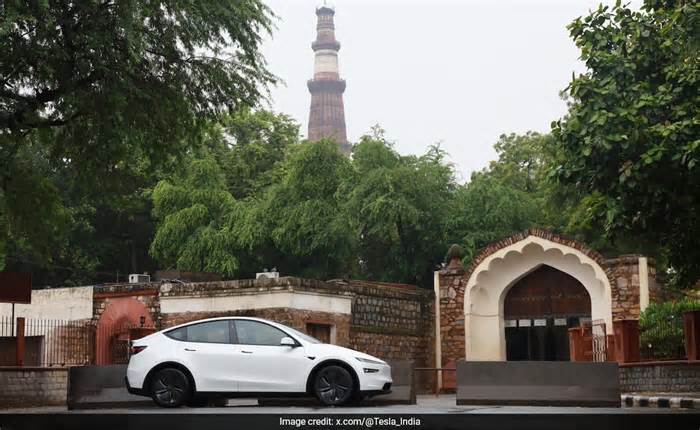
A base Model Y with FSD software costs consumers about $55,000 before taxes. While Waymo doesn’t disclose the cost of its modified, electric Jaguar I-PACE robotaxis, the lidar, radar, computers and other sensors mean it’s likely double that of Tesla’s vehicles. Those costs should drop substantially over the next year or so as Waymo shifts to lower-cost sensors and cheaper vehicles, including Hyundai’s Ioniq 5 and a small electric van from China’s Zeekr.
Boasts about cheaper Tesla robotaxis will be meaningless if they can’t safely pick up and drop off riders without causing traffic jams, yielding to pedestrians or avoiding collisions.
That’s made harder by the fact that Tesla uses eight 5-megapixel cameras as the main sensors for its system–far lower resolution than the 48-megapixel system on Apple’s iPhone 16. They’re inexpensive, but struggle with sunlight glare and low light conditions. Musk denied that was the case on Tesla’s April 22 call, but tests by O’Dowd’s Dawn Project after that found FSD disengages when directly facing the sun.
“He thinks having [lidar] does not add enough benefit to outweigh the cost. This is a pretty typical engineering argument in general but incorrect in this particular case.”
Missy Cummings
“We went out and took the car and drove it directly into the setting sun and guess what: it gave up,” O’Dowd said. “It starts flashing and it starts panicking, red lights going, it starts making noises, says put your hands back on the wheel.”
By contrast, Waymo uses multiple sensors, including the much more expensive lidar, to ensure its vehicles see all potential road hazards, in daylight or at night, in 3D.
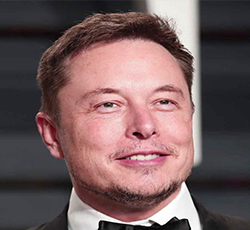
Elon Musk attends a Cabinet meeting with President Donald Trump on April 30, 2025.
The Washington Post via Getty Images
“Musk has repeatedly said lidar is expensive and not needed,” said Missy Cummings, an artificial intelligence expert who advised NHTSA on autonomous vehicles. “He thinks having it does not add enough benefit to outweigh the cost. This is a pretty typical engineering argument in general but incorrect in this particular case.”
After the Austin rollout, Musk said last month the goal is to expand to other U.S. markets, China and Europe, “limited only by regulatory approvals.” And one day soon, he envisions every person who owns a Tesla flipping a switch and deploying their car while not in use to a Tesla robotaxi network, helping them make additional cash on the side (as long as they pay Tesla $99 per month).
“It’s all lies.”
Please first to comment

Stay Connected
Tweets by elonmuskTo get the latest tweets please make sure you are logged in on X on this browser.