




 Energy



See All 23 Photos
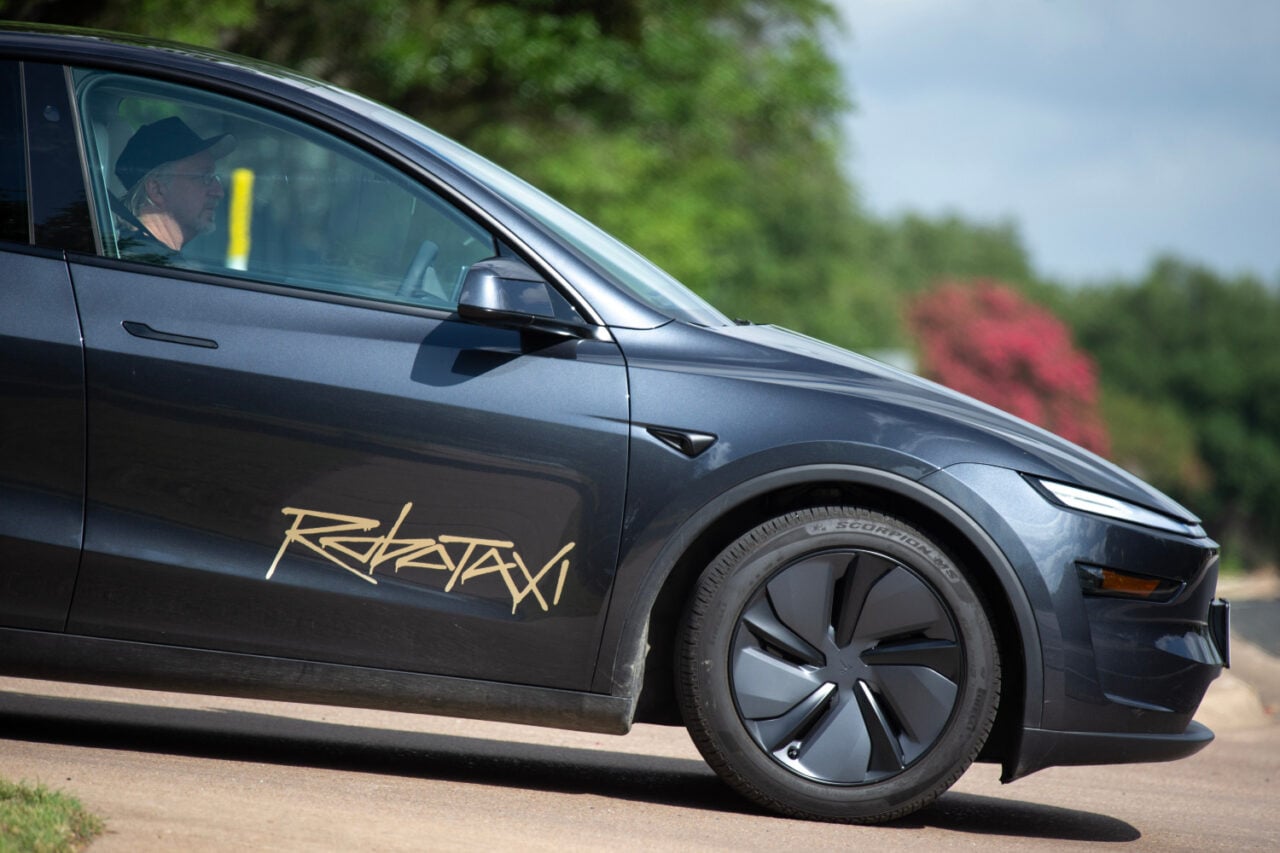
Miles keep accumulating on our long-term review 2023 Tesla Model Y, but I don’t drive it much anymore. Sure, I still go all over the place in our Tesla, but I don't drive—the car does. Its Full Self Driving (FSD) software can take me pretty much wherever with me simply supervising. I'm covering thousands of miles doing exactly that as a passenger behind the wheel.
0:00 / 0:00
I’m not using FSD because it’s bringing me much utility or, much less, enjoyment. I’m using it because we paid $15,000 for this software (it costs $8,000 today), and I’m going to do my job and report on how it works, dammit.
That’s despite FSD giving me many, many reasons to forsake it, to decide that my safety and sanity are worth more than what it cost. Yet the Full Self Driving note I created in my phone to log the system’s transgressions has an ever-increasing abundance of entries as we pile the miles onto our Model Y.
See All 23 Photos Is Tesla FSD 13 Better?
All these errors occurred with older FSD software. With the newest version 13 Telsa recently added to our Model Y via over-the-air update, FSD is hugely improved. It moves more fluidly and confidently. Crucially, how often I must take over to prevent it from doing something sketchy has been reduced from frequently to nearly never (as we go to press, our Model Y is on “beta” version 13.2.2). Nevertheless, FSD 13 continues to make utterly baffling and deeply idiotic driving decisions.
FSD 13 offers three profiles for its behavior. In the “Standard” logic, it nearly refuses to get around traffic to reach the speed limit or its set maximum speed, even when passing on the left would be simple and safe. Using the “Hurry” logic makes it more assertive but also impolite as it then hogs the left lane, brazenly uses right lanes to speed past other drivers, and begins lane changes on the first click of the turn signal. “Chill” logic is unbearable for getting places in a timely manner.
Twice in a week, FSD 13 completely missed freeway exits because it shifted over too late to negotiate fitting in with other traffic. Those bungles are bizarre given FSD 13’s tendency to otherwise move toward exits literal miles early, often abdicating the fast-moving left lane to fall behind slow vehicles to the right—vehicles it could’ve passed had it stayed put for longer. When merging onto a freeway, it will stubbornly attempt to fit into a gap regardless of whether those other closest drivers seem willing to allow it, ignoring suitable openings immediately ahead or behind. Generally, its lane shifting strategy is poor; I’ve counted as many as eight back-and-forth lane changes within a minute as FSD 13 tries to figure out what to do. The day this article was due, it veered toward a wall as two lanes converged into one.
If simple cruise control was the genesis for any self-driving tech, then FSD 13 represents an ignominious legacy as it struggles to maintain speeds. Once, it gradually relaxed its cruise speed to 64 mph in a 65 mph zone, when the maximum speed I allowed for it was 75 mph. There was absolutely no traffic, faulty input, or other detectable reason for this slowing. At other times, it doesn't keep up with leading traffic accelerating to the speed limit, driving slower than necessary and letting a gap ahead grow even when the Hurry logic is selected.
One would also hope that software ostensibly aware of the physical dimensions and dynamic abilities of the Tesla it controls would know how to avoid hitting markers along freeway curves and keep itself centered in the lane. Not FSD 13.
In myriad ways, FSD 13 lacks the situational awareness and intuition to get through urban environments effectively. It can't comprehend the limitless variables human drivers naturally learn over time. Rules of the road and FSD’s approach to them might not change throughout any given day, but the reality on the ground does, as traffic and environmental factors evolve. The limitations of FSD’s ability to perceive its surroundings or imagine them as they approach make it unable to be proactive and anticipatory like a good human driver.
See All 23 Photos
Please first to comment


Stay Connected
Tweets by elonmuskTo get the latest tweets please make sure you are logged in on X on this browser.