




 Energy



November 13, 2025 at 11:57 AM PST
Steve Jobs, co-founder of Apple Inc., was famous for his “reality distortion field.” Through a combination of charisma, bravado, doggedness and conviction that the impossible was possible, Jobs drove his engineers and his company to innovate and produce.
Like almost every chief executive, Jobs received generous compensation. While taking a symbolic annual salary of $1, Jobs received other forms of compensation such as a Gulfstream V jet airplane worth $90 million. When he died in 2011, Jobs left an estate worth an estimated $10.2 billion.
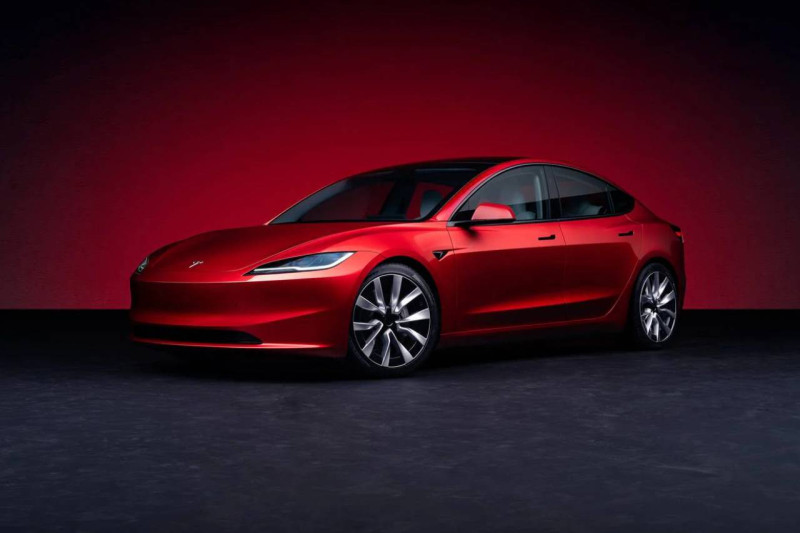
If Jobs and Apple prospered as the result of his reality distortion field, Elon Musk and Tesla rely on a “reality distortion universe.” As a company, Tesla’s share of the U.S. market for electric vehicles fell from 75% in 2022 to 46% in 2025. According to car buying service CarEdge, quarterly sales peaked at 175,262 in the third quarter of 2023 dropping to 149,500 in the third quarter of 2025. Company profits dove from $15 billion in 2023 to $7.1 billion in 2024. The profitability downturn continues with a further projected decrease of 30% in 2025. The robust but uncertain earnings recovery expected by the Value Line Investment Survey in 2026 will still leave earnings at barely more than half the level of earnings in 2023.
Tesla’s once formidable Chinese division is no help. Its market share shriveled to 2% in October dropping out of China’s Top 10 EV vendors.
These dismal results are compounded by the damage done to the Tesla brand due to Musk’s bromance with Donald Trump and his participation in the Department of Government Efficiency (DOGE).
And let’s not talk about the Cybertruck, which rivals — if not surpasses — the Ford Edsel as the most misbegotten product in automotive history.
Based on all of the above, Musk ought to be looking at a pay cut at best.
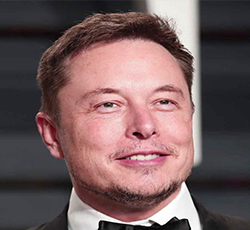
Instead, enraptured by the “reality distortion universe,” Tesla’s board of directors and shareholders approved a gargantuan new pay package, which could bring Musk as much as an estimated $1 trillion over the next 10 years.
The pay package is divided into 12 tranches each due upon the completion of certain milestones. These milestones typify Musk’s habit of overpromising and underdelivering. Examples of promises broken since his 2018 pay package include:
• In 2018, Musk said full self-driving would be available in a few years.
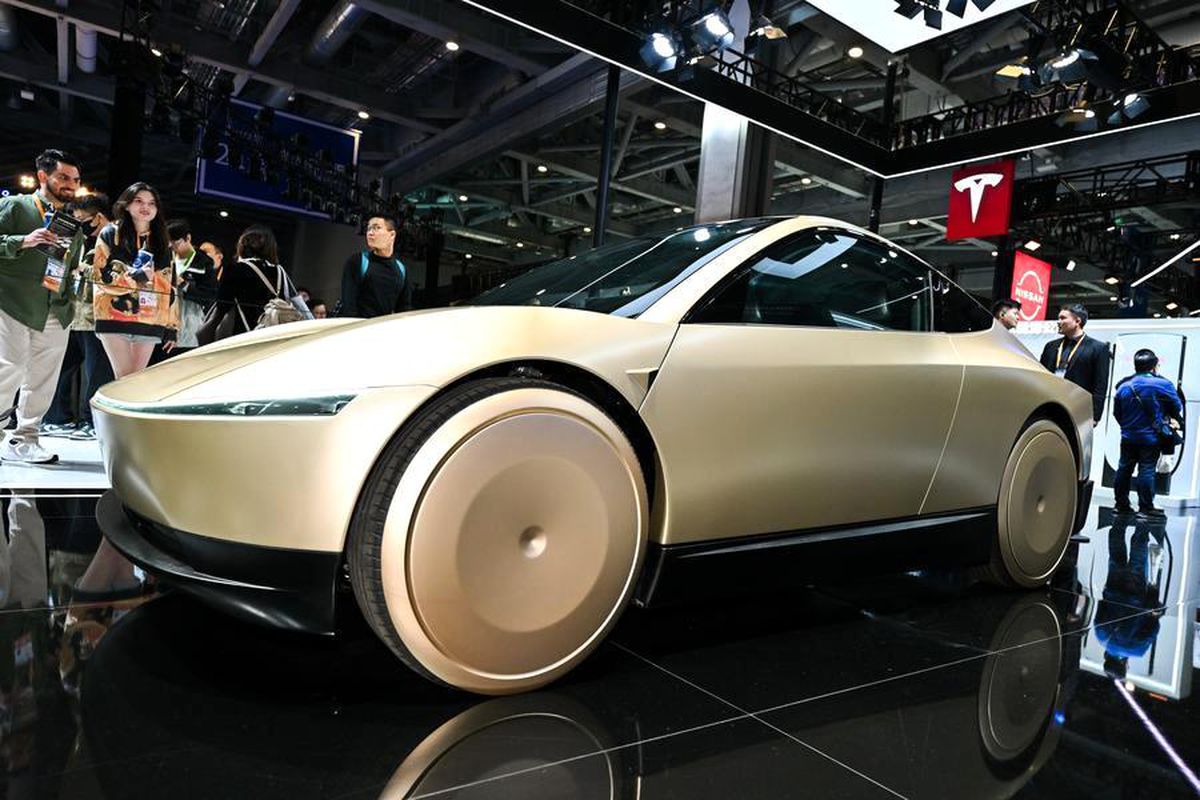
• In 2020, he promised Tesla would produce a $25,000 mass market vehicle.
• In 2019, he envisioned a fleet of more than 1 million robotaxis.
Having more or less failed to scale and grow automotive profitability, Musk has shifted gears to a vision of Tesla the platform company. The “reality distortion universe” now encompasses alternatives like humanoid robots, AI hardware/chip manufacturing and energy storage.
In the end, shareholders, the board and Musk are co-dependents whose fate hinges on either Musk delivering on his promises — however unlikely based on past performance — or maintaining the “reality distortion universe” of great things just around the corner. If the promises don’t materialize and reality sets in, it’s “look at below” for all involved.
Jeffrey Scharf welcomes your comments. Contact him at jeffreyrscharf@gmail.com.
Share this:
Please first to comment



Stay Connected
Tweets by elonmuskTo get the latest tweets please make sure you are logged in on X on this browser.