




 Energy


Key Points
Waymo grew its lead in the robotaxi market in 2025, and is now operating, planning to launch a service or testing its vehicles in 26 markets in the U.S. and abroad.
Amazon's Zoox began offering free driverless rides to the public around the Las Vegas Strip and certain San Francisco neighborhoods.
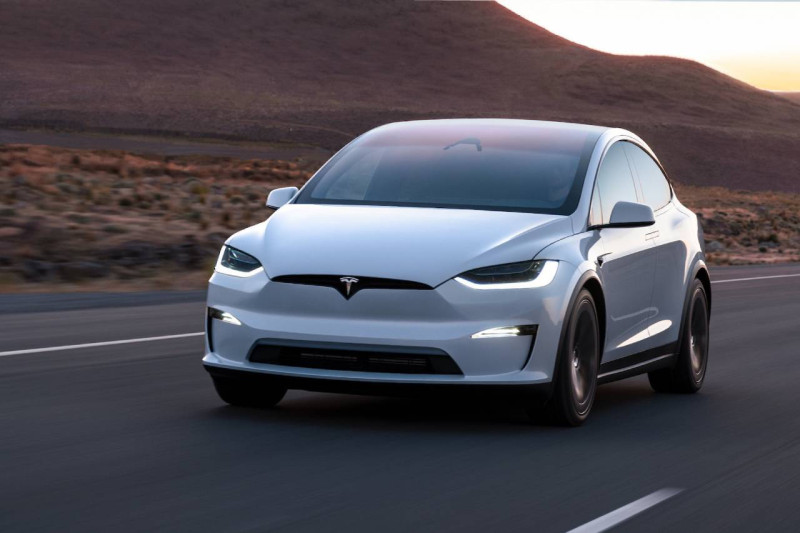
Tesla launched a Robotaxi-branded service in Austin and the San Francisco Bay Area, but those cars still had human drivers or safety supervisors on board as of mid-December.
watch now Amazon's Zoox gets rolling
Zoox revved up its robotaxi ambitions this year by opening up rides to the public in two markets.Â
Founded in 2014 and acquired by Amazon
for $1.3 billion in 2020, Zoox has set itself apart with its bespoke, toaster-shaped vehicles that have no steering wheel, mirrors or pedals and are equipped with "carriage-style," inward-facing seats.
The company notched a milestone in September when it began offering public rides around the Las Vegas Strip before launching rides to select users in certain San Francisco neighborhoods in November. Currently, Zoox is dropping riders off at specific destinations in Las Vegas, but in San Francisco, it operates on a "point-to-point" basis more akin to Uber and Lyft.
For now, rides in Zoox's electric shuttles are free.
That's because the company still needs federal regulators to give it the green light to operate a paid service. The NHTSA granted Zoox an exemption in August that enables the company to demonstrate its purpose-built robotaxis on public roads, but it must obtain a separate exemption for commercial deployment.
Zoox is planning to begin charging for rides in San Francisco and Las Vegas in 2026, pending regulatory approvals, co-founder Jesse Levinson told Fortune earlier this month.
More markets are also expected in 2026. Zoox plans to gradually expand its service area in San Francisco, and the company operates a fleet of retrofitted Toyota Highlander SUVs in Atlanta, Austin, Los Angeles, Miami, Seattle and Washington, D.C. It's also preparing to begin testing its boxy robotaxis in Austin and Miami, Zoox spokesperson Marisa Wiggam said.Â
But Zoox's rollout hasn't been without hiccups.
The company issued a software recall in March for some of its test fleet to resolve a phantom braking issue that prompted a NHTSA investigation. Zoox also issued two voluntary software recalls in May after its robotaxi collided with an e-scooter rider in San Francisco and one of its vehicles was involved in a crash with a passenger car in Las Vegas.Â
The Amazon subsidiary has deployed a fleet of 50 robotaxis between San Francisco and Las Vegas, but Zoox is preparing to scale up. In June, the company opened a 220,000-square-foot factory in the San Francisco Bay Area, where it aims to produce 10,000 vehicles a year once it's fully operational.Â
A vehicle Tesla is using for robotaxi testing purposes on Oltorf Street in Austin, Texas, US, on Sunday, June 22, 2025. The launch of Tesla Inc.'s driverless taxi service Sunday is set to begin modestly, with a handful of vehicles in limited areas of the city. Photographer: Tim Goessman/Bloomberg via Getty Images
Tim Goessman | Bloomberg | Getty Images
Tesla debuts 'Robotaxis' (with human safety drivers)
For more than a decade, Musk has promised that Tesla will "solve autonomy," and that the company's electric vehicles will soon be upgradeable into driverless robotaxis.
That still hasn't happened, but Tesla kept the dream alive in 2025 by demonstrating a driverless delivery, where one of its electric vehicles navigated autonomously from the company's Austin factory to a nearby customer's doorstep in June.
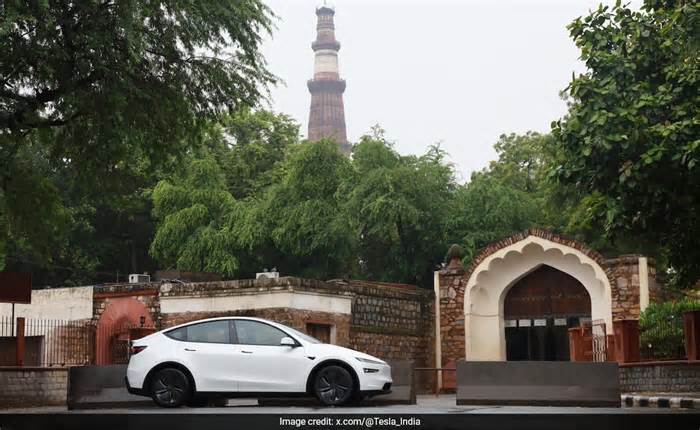
At that time, the company also launched a Tesla Robotaxi pilot service in Austin and, soon after, a service in the San Francisco Bay Area called its "full self-driving" or FSD (Supervised) Rideshare.
All of Tesla's vehicles for hire are hailed through its Robotaxi app. By September, Tesla made that app widely available. It also locked in a permit for AV testing in Nevada, and obtained a permit to operate a ride-hail service in Arizona, after previously securing permission to test self-driving cars there with a human safety driver on board.
The company has stirred controversy, and regulatory scrutiny, by recruiting test drivers in cities where it does not have permits to conduct any driverless operations â most notably New York, CNBC first reported in August.
In Tesla's third-quarter earnings call in late October, Musk said the company expected to be operating a robotaxi service in Nevada, Florida and Arizona by the end of the year. That had not happened as of mid-December.
Tesla's Robotaxi vehicles included human safety monitors on board as of mid-December. Those supervisors are supposed to be ready to take over steering or braking at any time.
But one California rider posted a video on Reddit in November showing a Tesla rideshare monitor asleep at the wheel. The NHTSA and California Public Utilities Commission told CNBC they were aware of the incident. CPUC said it was in touch with Tesla about it.
It's unclear when Tesla will be able to run its ride-hail services without human supervisors. But on Sunday, Ashok Elluswamy, Tesla's vice president of AI software, shared a post on X that said one of the company's Model Y robotaxis was spotted driving on public roads in Austin without any people on board.
"Testing is underway with no occupants in the car," Musk posted on Sunday.
Tesla did not respond to a request for comment.
In California, the company has yet to obtain the permits needed to run a commercial robotaxi service, according to the CPUC and the state's Department of Motor Vehicles.
While all AV companies face uphill battles to prove the safety of their systems, Tesla's driverless tech is drawing closer scrutiny. That's in part because of the dozens of fatal collisions tied to its advanced driver assistance systems, currently marketed as Autopilot and FSD (Supervised) in the U.S., according to TeslaDeaths.com which tracks those incidents.
After launching its pilot service in Austin in late June, Tesla reported seven collisions involving its 2026 Model Y vehicles through Oct. 15 to NHTSA. Those vehicles were equipped with Tesla's newer ADS, or "automated driving systems," which are not yet widely available, and those collisions weren't severe, according to the NHTSA data.
Musk in October said Tesla would be "paranoid about deployment because obviously even one incident will be front-page headline news."Â
In November, Musk posted on X that Tesla would double its fleet of vehicles in the Austin area this month. That would put the fleet at 60 vehicles by year's end, which is significantly less than an earlier stated goal of 500 robotaxis.
Still, Tesla bulls are betting that the automaker will evolve its cars and ride-hailing operations into fully driverless robotaxis in the year ahead, citing the company's vast troves of data gathered from customers' cars and updates to the FSD (Supervised) system in the past year.
And consumer interest in Tesla's service is growing.
Launched in September, the Tesla Robotaxi-branded app has been installed 529,000 times as of Dec. 12, with an average of 2,790 downloads per day over the last 30 days, according to Apptopia. By comparison, Waymo's app averaged 24,831 downloads per day over the same time frame, Apptopia said.
A Baidu Inc. Apollo Go autonomous driving electric vehicle displayed at the International Automotive and Supply Chain Expo in Hong Kong, China, on Thursday, June 12, 2025.
Chan Long Hei | Bloomberg | Getty Images
Formidable competition from China
Chinese rivals in 2025 posed a greater challenge to Waymo than its domestic competitors, as they continued to win market share in China and tiptoed into other countries.
Search giant Baidu ramped up its Apollo Go robotaxi this year, saying in October that it had surpassed 250,000 weekly driverless rides, which is on par with where Waymo was in April.
Apollo Go operates robotaxis in several major Chinese cities, including the suburbs of the capital city Beijing and the entire city of Wuhan.
It's also working to expand to Abu Dhabi and Dubai in the United Arab Emirates, Guangzhou in China, Hong Kong and Switzerland. In August, the company announced a partnership with Lyft to bring its robotaxis to the U.K. and Germany in 2026.
In November, Apollo Go disclosed in a third-quarter update that it had received 17 million robotaxi ride orders and that its cars had driven 240 million kilometers (149 million miles), including 140 million fully driverless miles through September.
Please first to comment


Stay Connected
Tweets by elonmuskTo get the latest tweets please make sure you are logged in on X on this browser.