





 Energy




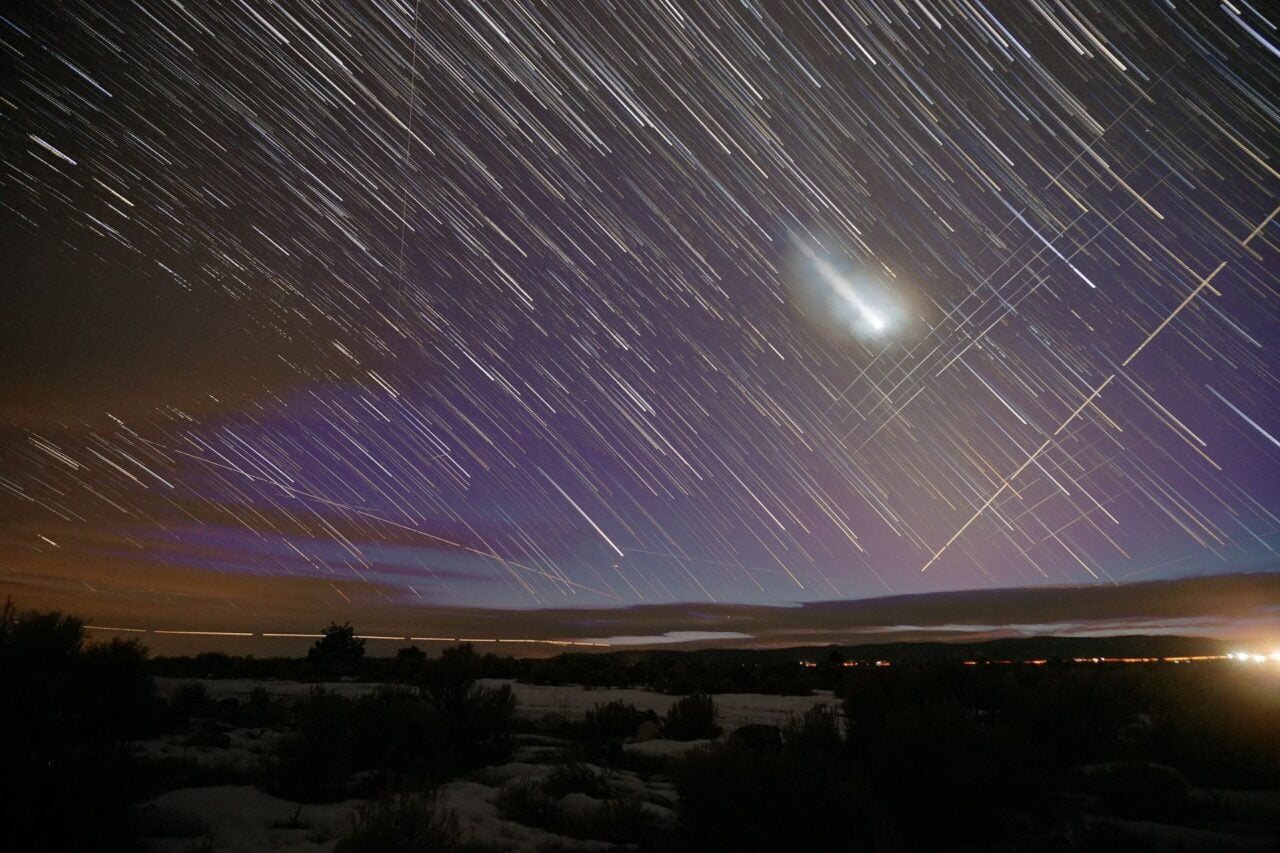
— Michael Nicolls (@michaelnicollsx) January 1, 2026
The danger of an overcrowded orbit
More than 9,000 of Earth’s 14,300 active satellites are Starlinks, according to Jonathan McDowell, a retired astrophysicist who tracks objects in low-Earth orbit. SpaceX hopes that number will eventually grow to 42,000 Starlinks. With other companies and institutions launching satellites of their own, we’re quickly running out of orbital real estate.
Experts warn that the consequences of overcrowding LEO could be dire. A recent study found that satellites—especially Starlinks—are constantly maneuvering to avoid collisions. If they suddenly lost their ability to do so, this could lead to a catastrophic crash within just 2.8 days, the researchers concluded.
Such a collision could generate enough debris to cause more collisions and potentially initiate the first stage of Kessler syndrome. In this theoretical scenario, LEO becomes so congested that collisions between objects trigger a chain reaction, producing exponentially more debris. This would debilitate the satellite networks we depend on and make it impossible to launch certain space missions.
Satellite operators must act urgently to prevent this worst-case scenario, but the simplest solution—launching fewer satellites—is unrealistic. Humanity’s dependence on satellite systems like GPS and communications is only growing, driving an industry boom that’s also fueled by decreasing launch costs and rising government investment.
And even if we stopped launching new satellites tomorrow, the volume of existing objects in LEO would continue to pose a significant collision risk. So, Nicolls is pursuing an alternative solution: shifting several thousand Starlinks to a lower orbit.
Lower satellites, lower collision risk
According to Nicolls, the reconfiguration will put these Starlinks in a much less crowded orbit, reducing the aggregate likelihood of collision.
The move will also allow the satellites to deorbit more quickly at the end of their active lifespans, reducing the number of defunct Starlinks hanging around in orbit. Atmospheric drag is greater at lower altitudes, so by flying lower, they reenter the atmosphere sooner. Once in their new orbit, these 4,400 Starlinks should see an 80% reduction in the time it takes to naturally fall back to Earth, from more than four years to just a few months, Nicolls said.
This will be especially important as we approach solar minimum—the low-activity phase of the Sun’s 11-year cycle—which is expected to occur around 2030. As we get closer to this part of the cycle, atmospheric density decreases because the Sun emits less extreme solar ultraviolet radiation. This causes the atmosphere to cool and contract, reducing drag and causing defunct orbiters to stay in space longer.
The reconfiguration is a massive undertaking that will require precise, coordinated maneuvers across thousands of Starlink satellites. SpaceX will also need to work closely with other operators, regulators, and U.S. Space Command to carry it out safely. While the potential benefits to space safety appear significant on paper, their real-world impact remains to be seen.
Explore more on these topics
Please first to comment



Stay Connected
Tweets by elonmuskTo get the latest tweets please make sure you are logged in on X on this browser.