




 Energy


Faraday Future InvestorDay: FX Super One U.S. delivery roadmap, Tesla charging access, robotics push

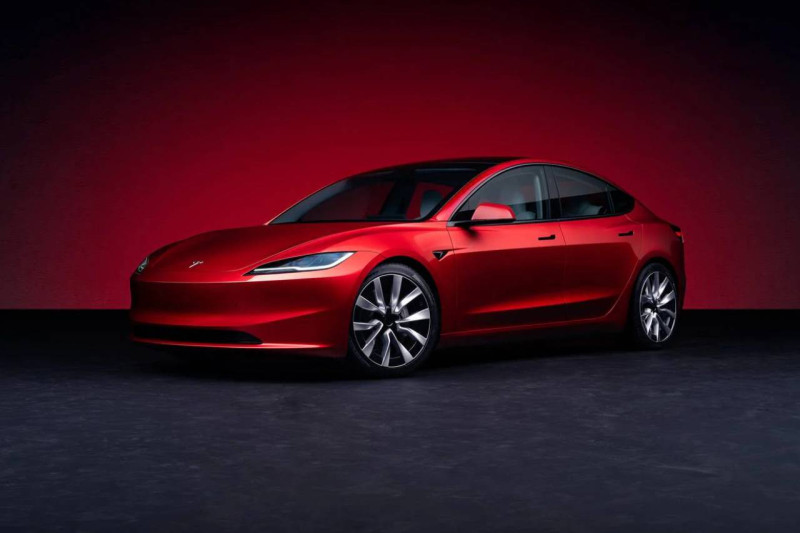
Image from MarketBeat Media, LLC.
Key Points
Faraday laid out a three‑phase U.S. delivery roadmap for the FX Super One — Phase one (Q2) up to 50 partner units, Phase two (Q3) ~200 controlled deliveries, and Phase three (Q4 or Q1) full‑scale rollout — and said FF/FX vehicles will gain access to the Tesla Supercharger network starting in 2026.
The first U.S. pre‑production FX Super One rolled off the Hanford line, component certifications are underway and full EPA/CARB/FMVSS homologation launches in April, while Faraday targets cumulative production of 400,000–500,000 vehicles over five years and aims for positive EBITDA within three years.
Faraday announced a new “embodied AI robotics” product category with private previews completed and a public launch on Feb. 4 at the NADA Show, expanding its EAI Industry Bridge strategy alongside strategic partnerships and reported >10,000 non‑binding B2B pre‑orders for FX vehicles. These 5 Penny Stocks Just Surged Double Digits
He also said FF 91 deliveries continued during the year and expanded beyond California, citing a delivery to Hebron Sher, CEO of Seeville, on Dec. 22, 2025, with a ceremony planned later in January. Eydt referenced the company’s July 17, 2025 global initial launch of the FX Super One MPV in Los Angeles and said Faraday had received “non-binding and non-refundable” B2B pre-orders for more than 10,000 units.
Eydt further discussed policy and strategy initiatives, including a July reception in Washington, D.C. with meetings involving U.S. lawmakers on tariffs, technology, and American manufacturing, and said Donald Trump Jr. expressed support for Faraday’s U.S. manufacturing and assembly efforts. He also noted an “EAI and crypto dual flywheel and dual bridge eco strategy” unveiled at Pebble Beach in August 2025, and said a majority-owned Nasdaq-listed company, Qualigen Therapeutics Inc., changed its name and ticker to AIX Crypto Holdings Inc. (AIXC), which he described as supporting initiatives aimed at bridging Web2 and Web3.
FX Super One: U.S. pre-production and delivery phases
Max Ma, Global CEO of the FX brand, said his focus is executing the company’s “FX3 strategy” and turning it into what he called a scalable industrial system to enable production of “embodied AI vehicles” in the U.S. Ma said a key milestone was reached when the first U.S. pre-production FX Super One rolled off the line at the company’s Hanford, California factory. He described this as the initial closure of the “FX Bridge loop” in the U.S., covering supply chain integration, localized testing and homologation, customs and regulatory clearance, industrialization, final assembly, and U.S.-based operational deployment.
Ma said the company’s U.S. delivery plan is structured into three phases:
Phase one: Q2, initial deliveries to “FX partner co-creation partners,” focused on user engagement, validation, and experience refinement.
Phase two: Targeted for Q3, controlled and limited deliveries to industry leaders and B2B partners alongside controlled ramp-up.
Phase three: Planned for Q4 or Q1 of the following year, depending on execution, transitioning into full-scale U.S. market delivery.
Ma added that the company’s U.S. after-sales and charging ecosystem is targeted for completion in Q2. He also said that starting in 2026, FF and FX vehicles will have direct access to Tesla’s Supercharger network.
On the regulatory front, Ma said component-level certifications were underway and that full vehicle EPA, CARB, and FMVSS homologation would formally launch in April. He also said the FX Super One is already being delivered in the Middle East, which the company is using as an early deployment and co-creation environment. Looking beyond the FX Super One, Ma said FX is conducting preliminary planning and feasibility work on the next major platform, FX4, which he said would extend FX into a new high-volume segment.
Business plan targets and competitive positioning
President Jerry Wang said Faraday Future has four competitive advantages, including what he called a “Light 4, Suite 4, Focus 5, and Empowering 5” model tied to the company’s bridge strategy, supplier support from “S Tier 1” partners, U.S.-developed software intended to help meet ICTS-related requirements, and an expanding U.S. “access parts” network for vehicle showcasing and after-market service.
Wang described the FF 91 2.0 Futurist Alliance as an ultra-luxury flagship model in limited delivery and positioned FX as the mass-market brand. He said the FX Super One competes with the Cadillac Escalade and is priced around $84,000 in the UAE market.
Wang also presented five-year production and sales expectations, stating the company’s cumulative target is around 400,000 to 500,000 vehicles, primarily driven by the FX Super One, FX4, and future models. He said the company expects to produce and sell 250 units in 2026, 4,900 in 2027, 22,000 in 2028, 130,000 in 2029, and 250,000 by 2030. He added that the company aims to reach positive EBITDA within three years and is targeting contribution margin rates above 20% aligned with production volumes.
Financial framing and a new robotics category
CFO Koti Meka highlighted Faraday Future’s market capitalization at around $200 million, contrasting it with much larger market caps for major automakers and EV makers such as Lucid and Rivian. Meka said the company believes this gap presents upside if it executes its plan and improves funding and liquidity, and he said Faraday expects market capitalization, revenue, EBITDA, and cash flow to improve over the next three years. He also compared Faraday’s projected year-three business plan metrics with Lucid’s trailing 12-month EBITDA and cash flow, arguing Faraday’s model is designed to be more efficient by leveraging a proven platform and economies of scale with an OEM partner.
Founder and Global Co-CEO YT Jia reiterated the phased FX Super One delivery approach in the U.S., including a phase one cap of 50 units in Q2 aimed at partner feedback and co-creation, and a phase two cap of 200 units in Q3 alongside capacity ramp-up and a target for positive contribution margin. Jia said the company aims to begin phase three “full-scale delivery” in Q4 or Q1 of next year, open to broader buyers, while continuing to target positive contribution margins. He also said the company has secured access to Tesla Supercharger networks in the U.S., Canada, Japan, and South Korea.
Jia announced what he called a new EAI product category: “embodied AI robotics.” He said Faraday’s goal is to become the first company in the U.S. to deliver humanoid robot products to market and to be one of the leading U.S.-based AI robotics companies. Jia said the company held private preview sessions for its first batch of EAI robotic products, and announced a Feb. 4 final launch for FFAI robotics products at the National Automobile Dealers Association (NADA) Show in Las Vegas, including public product experiences and the start of sales. He also said the company plans to host an “FXPAR Summit” during the NADA Show aimed at expanding partner participation in both vehicle sales and robotics.
About Faraday Future Intelligent Electric
NASDAQ: FFIE
Please first to comment


Stay Connected
Tweets by elonmuskTo get the latest tweets please make sure you are logged in on X on this browser.