




 Energy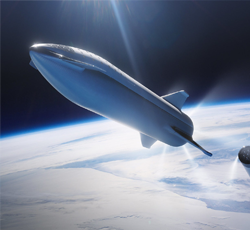


Check out more newsletters
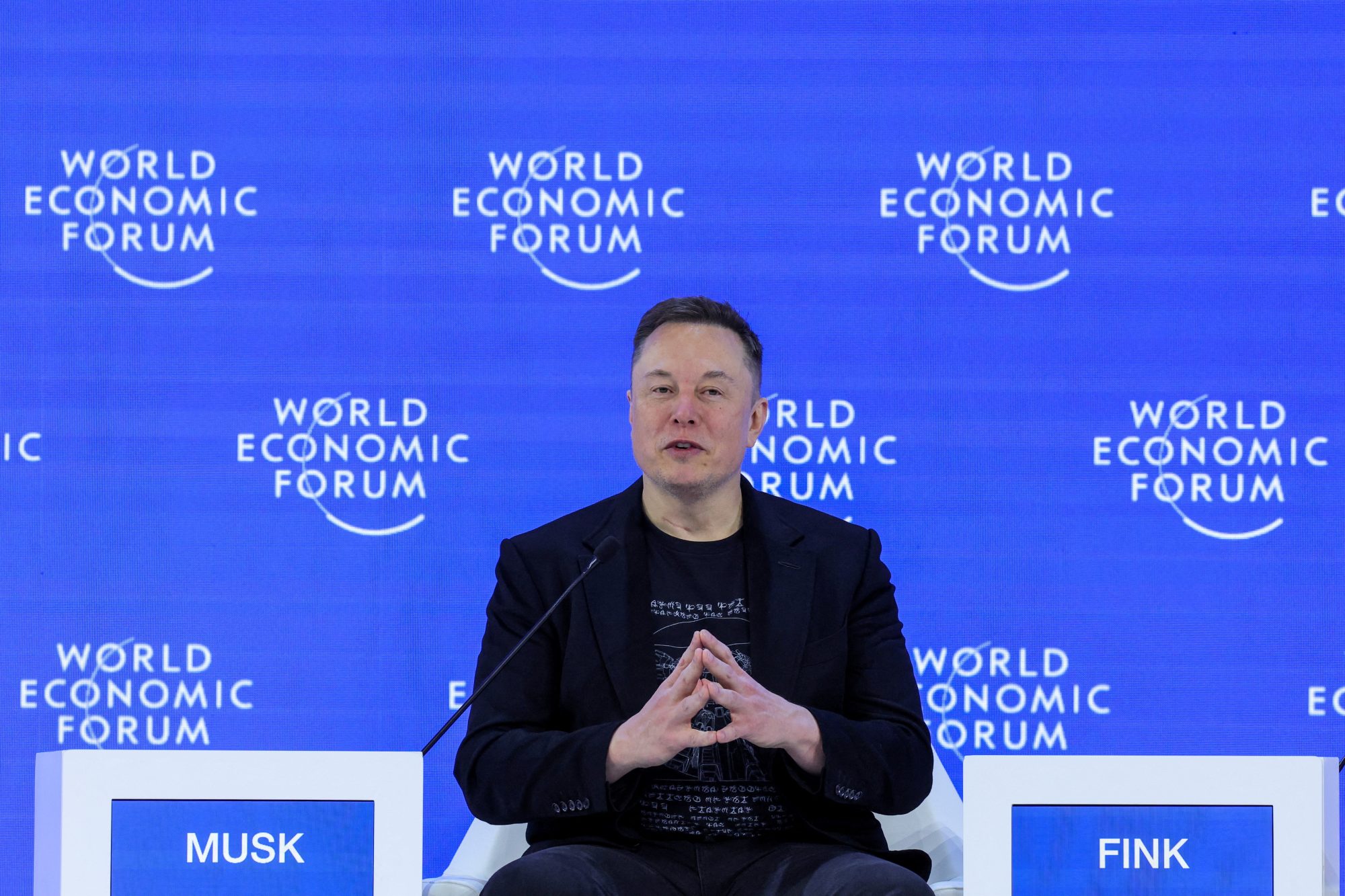
Musk: Well, the key breakthrough, the major breakthrough that SpaceX is hoping to achieve this year is full reusability. So no one has ever achieved full reusability of a rocket, which is very important for the cost of access to space. We’ve achieved partial reusability with Falcon 9 by landing the booster stage. We’ve now landed the booster over 500 times.
But we have to throw away the upper stage. The upper stage sort of burns up on reentry for Falcon 9.
So, and the cost of that is equivalent to a small to medium sized jet. But with Starship, which is a giant rocket, it’s the largest flying machine ever made.
Fink: That’s a rocket that you’re using for the idea of going to Mars, right?
Musk: Yeah, Mars and the moon, as well as for high volume satellite stuff. So Starship, hopefully this year we should prove full reusability for Starship which will be a profound invention because the cost of access to space will drop by a factor of 100 when you achieve full reusability.
It’s the same sort of economic difference that you would expect between, say, a reusable aircraft and a non-reusable aircraft. Like if you have to throw your aircraft away after every flight, that would be a very expensive flight. But if you only have to refuel, then it’s the cost of the fuel. And so that’s really the fundamental breakthrough that gets the cost-of-access to space. Below the cost of freight on aircraft. Under $100 a pound type of thing easily.
So it makes putting large satellites into space very cheap. And then when you have solar in space, you get five times more effectiveness, maybe even more than that, than solar on the ground. Because it’s always sunny. You don’t have a day-night cycle or seasonality or weather. And you get about 30% more power in space because you don’t have atmospheric attenuation of the power. Any given solar panel will do five times more energy and space than on the ground.
Fink: Is there any capacity in doing that and then taking that power and bringing it back to Earth? Is there a way of doing that or are you just taking that power and utilizing it for the needs, like building AI data centers in space?
Musk: It’s a no-brainer for building AI, solar-powered AI data centers in space . . . It is also very cold in space, if you’re in the shadow. So you just have, you have solar panels facing the sun and then a radiator that’s pointed away from the sun. So it has no sun incidence and then it just cooling, it’s just a very efficient cooling system. Net effect is that the lowest cost place to put AI will be space, and that will be true within two years, maybe three, three at the latest.
Bright future
Fink: So looking 10 or 20 years out, how would you describe success with AI or space technology, and where do you see it? Are you more certain what’s going to happen the next three years, or five or 10?
Musk: I don’t know what’s going to happen in 10 years, but the rate at which AI is progressing, I think we’ve . . . We might have AI that is smarter than any human by the end of this year.
And I would say no later than next year. And then probably by 2030 or 2031, call it five years from now, AI will be smarter than all of humanity collectively.
Fink: Do you see yourself ever going to Mars in your lifetime?
Musk: I’ve asked it a few times, like do I want to, you know, die on Mars? And I’m like, yes, but just not on impact.
Fink: Elon, thank you. Any last words?
Musk: Well, I think generally, I mean my last words would be, I would encourage everyone to be optimistic and excited about the future. Good. And generally, for quality of life, it is actually better to err on the side of being an optimist and wrong rather than a pessimist and right.
Filed under
Please first to comment


Stay Connected
Tweets by elonmuskTo get the latest tweets please make sure you are logged in on X on this browser.