





 Energy





SHARE
Australian telecommunications carriers are facing mounting pressure as Elon Musk’s SpaceX moves to dramatically expand its satellite ambitions, a shift that could upend both traditional mobile networks and land-based data centres.
The threat escalated after SpaceX filed an application to build a satellite network up to 100 times larger than the number of satellites currently in orbit. The proposal not only challenges Australia’s major carriers, but also signals a long-term risk to terrestrial data centres that underpin the rapidly growing AI industry.
Optus and Telstra currently partner with SpaceX’s Starlink, but industry observers warn these relationships may prove fragile with the carriers dropped in the future for direct online access to satellite services with mobile phone brands working directly with satellite Companies to sell mobile handsets.
There is growing concern that Australian carriers could be reduced to little more than order-takers for satellite hardware, or bypassed entirely, as satellite operators establish their own direct-to-consumer operations across Australia.
SpaceX and other satellite providers envision a future where businesses and consumers connect directly to orbital networks, supported by space-based data centres powered primarily by solar energy.
These orbital facilities, SpaceX argues, would be cheaper and far more environmentally sustainable than land-based data centres, which require vast amounts of electricity and water for cooling.
Data centres have become increasingly controversial in Australia, with communities pushing back against new developments over concerns about water usage, rising energy costs, and environmental impact. Unlike terrestrial facilities that siphon water and discharge it back into the ground or ocean, orbital data centres could radiate heat directly into the vacuum of space, relying on solar power and minimal battery storage.
It is little surprise, then, that some of the world’s biggest technology companies are turning their attention skyward. Space has become one of the few frontiers free from community opposition, and companies such as Amazon and SpaceX are investing billions of dollars to dominate satellite communications.
Amazon’s satellite initiative—formerly Project Kuiper and rebranded as Amazon LEO in November 2025—is a low-Earth-orbit (LEO) network designed to deliver high-speed, low-latency broadband worldwide through a constellation of more than 3,200 satellites. A key Australian partner in the Amazon LEO offering is NBN.
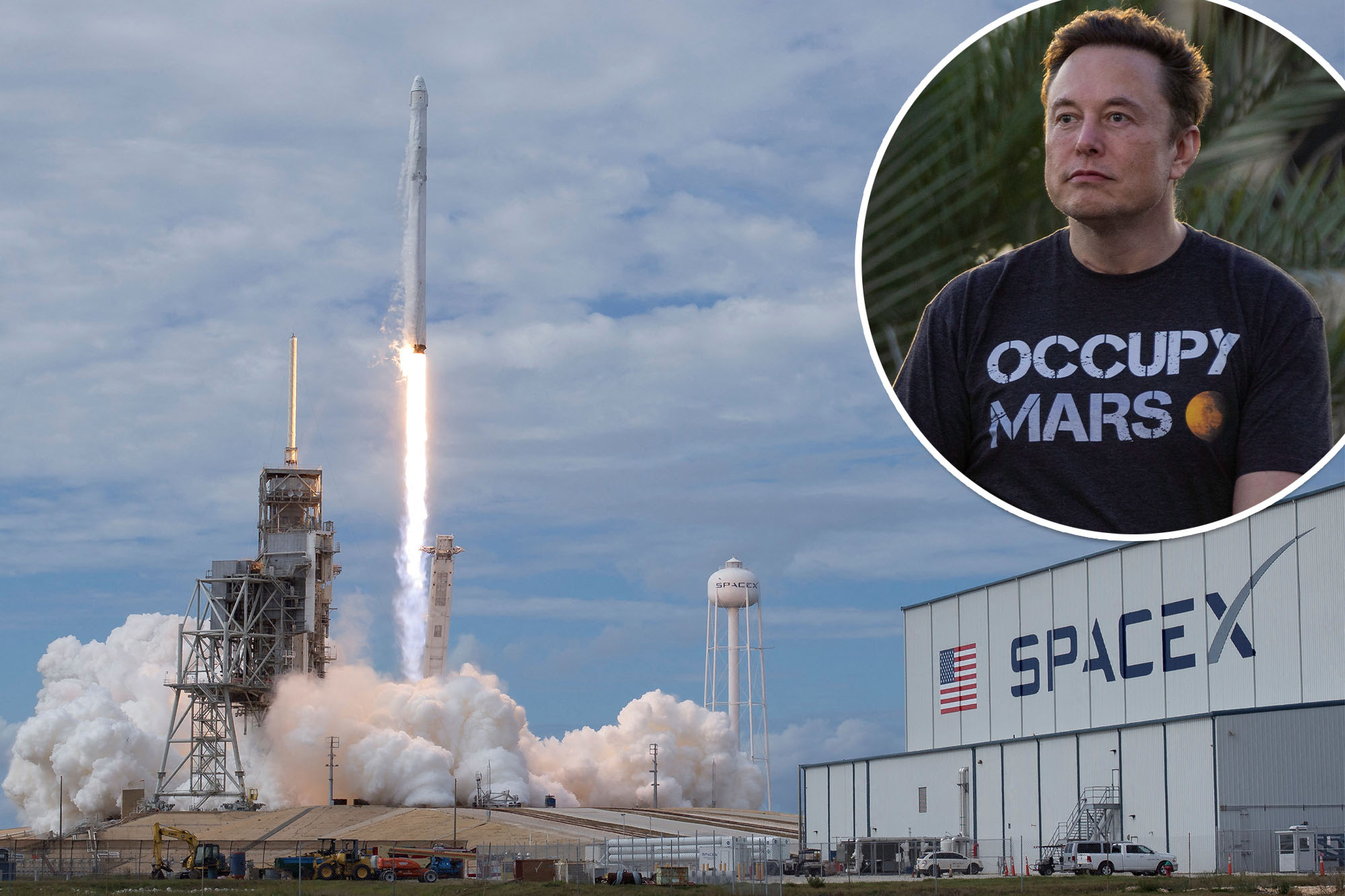
Over the weekend, SpaceX revealed even more ambitious plans, filing an application with the US Federal Communications Commission (FCC) to launch up to one million satellites to create what it describes as an “orbital data centre.” This proposal comes on top of the 9,600 Starlink satellites already in orbit as of January 30, 2026.
The filing outlines a network of solar-powered orbital data centres communicating via laser links, describing the initiative in almost science-fiction terms as a “first step towards becoming a Kardashev Type II civilization”—one capable of harnessing the full power of the Sun.
Earlier this month, the FCC approved SpaceX’s request to deploy an additional 7,500 Starlink satellites, following a similar approval in 2022. Starlink continues to improve overall network performance through technology upgrades and “constellation densification”—simply put, launching more satellites.
More satellites mean more capacity. Each satellite contributes to total network throughput, increasing aggregate bandwidth and allowing greater frequency reuse, particularly in high-demand metropolitan areas. A denser constellation also improves reliability, with more satellites visible to user terminals at any given time.
At CES, SpaceX revealed that operating satellites at lower orbital altitudes reduces signal travel distance, lowering latency and improving responsiveness—critical for applications such as gaming, video conferencing, and real-time services.
Third-generation Starlink satellites now under development for Australia are expected to deliver dramatically higher performance, with downlink capacities of up to one terabyte per satellite. These upgrades are expected to push gigabit-class broadband into the mainstream.
Starlink already uses inter-satellite laser links to route traffic directly through space, reducing dependence on ground stations and further lowering latency. For Australia, this means higher speeds, greater reliability, and improved coverage—particularly in densely populated areas.
A larger constellation also enables new services, including direct-to-mobile satellite connectivity and other advanced communications products. Industry analysts warn this shift could prove devastating for traditional carriers such as Telstra, Optus, and Vodafone, as satellite operators increasingly control pricing and customer relationships.
In that future, businesses—and even individual consumers—may simply sign up online for satellite services, with no need for a traditional telecommunications carrier at all.
About Post Author
Please first to comment


Stay Connected
Tweets by elonmuskTo get the latest tweets please make sure you are logged in on X on this browser.