




 Energy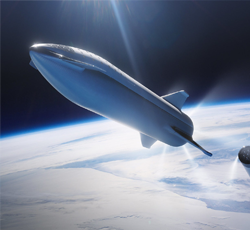

The 12-year quest behind the SpaceX-xAI merger: From a 2012 warning about AI destroying Mars colonies to a $1.25 trillion deal

On February 2, 2026, the pieces have come together. SpaceX announced its acquisition of xAI. The deal creates a combined entity valued at $1.25 trillion. The startup is likely the world’s most valuable private company, worth more than double the $500 billion valuation that made OpenAI the world’s most valuable startup just four months earlier.
The official rationale: “space-based AI data centers” to solve Earth’s energy constraints for AI training. “The lowest cost place to put AI will be space,” Musk said at Davos, “and that will be true within two years, maybe three.”
The visions of merging AI and interplanetary exploration are not new. According to OpenAI’s account, which Musk’s court filings omit, the succession discussion caught co-founders off guard: AGI governance would pass to his children in the form of an $80 billion .
The review mirror points to a more complicated picture. And so do thousands of pages of recently unsealed court documents from Musk v. OpenAI, the fraud case heading to jury trial in April before U.S. District Judge Yvonne Gonzalez Rogers in Oakland, California. And so does a conversation from 2012 that set Musk on a path to this moment that OpenAI posted to its website.
The efficiency problem
xAI is burning approximately $1 billion every month, which Musk disputes as “nonsense,” According to Bloomberg, the company’s projected 2025 losses reached $13 billion against roughly $500 million in revenue. That’s a burn-to-revenue ratio of approximately 26:1.
For comparison, OpenAI, itself hemorrhaging cash, generated $12-13 billion in revenue against approximately $9 billion in losses in 2025. That is a ratio of closer to 0.7:1. With 800-900 million weekly active users versus xAI’s 64 million monthly active users, OpenAI’s per-user economics are roughly an order of magnitude more efficient.
The pattern
2014: Google acquires DeepMind, a firm that Musk was an early investor in. Before Google acquired DeepMind, Musk reportedly offered up to 5% of Tesla to get it.
2015: Sam Altman emails Musk: “Been thinking a lot about whether it’s possible to stop humanity from developing AI. I think the answer is almost definitely not. If it’s going to happen anyway, it seems like it would be good for someone other than Google to do it first.” Musk responds: “Probably worth a conversation.” Six months later, OpenAI is founded as a nonprofit counterweight.
2017-2018: According to OpenAI’s January 2026 blog post “The Truth Elon Left Out,” based on court documents: “Elon said he wanted to accumulate $80B for a self-sustaining city on Mars, and that he needed and deserved majority equity. He said that he needed full control since he’d been burned by not having it in the past, and when we discussed succession he surprised us by talking about his children controlling AGI.”
Musk demanded 50-60% equity. When rejected, he proposed merging OpenAI into Tesla “as its cash cow.” That too was rejected.
February 2018: Musk leaves OpenAI’s board.
March 2023: Musk signs the Future of Life Institute’s open letter calling for a six-month moratorium on AI development, warning of “profound risks to society and humanity.”
July 2023: Four months later, Musk announces xAI.
December 2025: “We might have AI that is smarter than any human by the end of this year,” Musk tells Diamandis. “And I would say no later than next year. And then probably by 2030 or 2031, AI will be smarter than all of humanity collectively.”
January 2026: At Davos, Musk calls AI progress “a little terrifying” while describing Grok 4 as “the smartest AI in the world.”
February 2026: SpaceX acquires xAI.
In December, Musk framed the competitive landscape bluntly: “My best guess is that xAI and Google will vie for primacy. And then at some point it’s going to be a competition with China.”
But by any standard efficiency metric, xAI is currently the least capital-efficient major AI lab in that race. The SpaceX merger provides two things xAI desperately needs: a path to the largest IPO in history, and a narrative that transforms a money-losing AI company into a visionary space-compute platform.
The question is why Musk would sustain those losses in the first place.
“Well, This Might Be True”
When DeepMind co-founder Demis Hassabis visited SpaceX headquarters in 2012, Musk proudly explained his Mars colonization plans as humanity’s “backup.” Hassabis’s response stopped him cold: the plan would only work “if superintelligent machines didn’t follow human beings on their trip to the planet.” AI accompanying humans, Hassabis warned, could lead to the colony’s destruction.
“[Musk] just hadn’t thought about this problem,” Hassabis later recalled. (Main source: Walter Isaacson’s Elon Musk biography (Simon & Schuster, 2023). “So he sat there for a minute, said nothing, and just thought, ‘Well, this might be true.'”
Musk invested in DeepMind shortly after. When Google acquired it in 2014 for $500 million, Musk tried desperately to prevent the deal, reportedly offering as much as 5% of Tesla to acquire DeepMind himself. He lost.
In emails released during the OpenAI lawsuit, Musk wrote in 2016: “Deepmind is causing me extreme mental stress. If they win, it will be really bad news with their one mind to rule the world philosophy.” He warned that Hassabis “could create an AGI dictatorship.”
The energy argument
Musk’s public case for space-based AI compute is straightforward. “The limiting factor for AI deployment is fundamentally electrical power,” he said at Davos. “We’re very soon, maybe even later this year, producing more chips than we can turn on. Except for China, China’s growth in electricity is tremendous.”
The math, as Musk presents it: solar panels in orbit generate roughly five times more power than on Earth (no night cycle, no weather, no atmospheric attenuation), while the cold of space provides efficient cooling. “You have solar panels facing the sun and a radiator pointed away from the sun,” he explained. “It’s just a very efficient cooling system.”
At the December Diamandis interview, he projected “100 gigawatts a year of solar-powered AI satellites” within the decade, requiring roughly 10,000 Starship flights annually. “There’s a path to get probably to a terawatt per year,” he said. “And if you want to go to 100 terawatts a year, you make those AI satellites on the moon and use a mass driver.”
The vision is coherent. Whether it justifies merging a $1 billion-per-month money-losing AI company with a rocket manufacturer is a different question, one the IPO prospectus will need to answer.
The regulatory shadow
Please first to comment


Stay Connected
Tweets by elonmuskTo get the latest tweets please make sure you are logged in on X on this browser.