




 Energy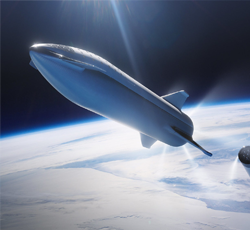




Brian Wang
Elon Musk discusses the convergence of AI, robotics, energy, and space tech as critical to humanity’s future. There are bottlenecks in power, chips, and manufacturing.
Elon predicts orbital data centers will become the cheapest and most scalable AI infrastructure within 30-36 months due to unlimited solar energy and regulatory ease, with SpaceX launching hundreds of gigawatts annually by 2031.
xAI’s business plan focuses on digital human emulation for massive revenue (trillions via services). It will leverage Tesla’s self-driving tech for self-driving computers and prioritizing hardware scaling for competitive edge.
On humanoid robotics (Optimus), Musk outlines a path to millions of units/year by solving hand dexterity via custom actuators, using self-play in Optimus Academies for training, and enabling recursive manufacturing for exponential growth, potentially solving U.S. labor shortages and national debt.
TeraFab is positioned as a massive chip fab (millions of wafers/month) to produce 100 gigawatts/year of space-optimized chips by 2030, addressing chip shortages through vertical integration of logic, memory, and packaging, with initial small-scale prototypes to iterate. There are technical challenges like radiation tolerance, cryogenic materials to handle wide temperatures in space and business strategies. They will prepay suppliers and focusing on removing limiting factors like energy/chips for dominance over China.
It is harder to scale on the ground than in space for AI data centers. You get five times more power for a solar panel in space versus the ground and you do not need batteries.
Global electricity output (flat outside China) can’t match exponential chip growth. Orbital centers solve this via unlimited solar (5x more effective in space, no batteries needed), predicting space as the cheapest AI location in 30-36 months.
SpaceX aims for 10,000+ Starship launches/year (one/hour) to deploy 100 gigawatts annually by 2031, scaling to terawatts/year. Beyond that, a lunar mass driver enables petawatts/year using moon-mined materials (silicon/aluminum for solar/radiators, chips from Earth).
Solar cells in china are 25 cents per watt. Put those in space and they are ten times cheaper. Five times more power without batteries. A gigawatt of pure solar cells would be $250 million in China but would be $25 million in space.
330,000 Nvidia needs a gigawatt of power on the ground. You need cooling, networking and servicing.
The vanes and blades for gas turbines are the limiting factor.
GPUs reliable post-infant mortality (test on ground). Radiation resistance via neural net redundancy. Run chips hotter (20% Kelvin increase halves radiator mass). No servicing needed for mature chips.
Regulatory play—easier/faster than Earth permits. SpaceX becomes “hyper-hyperscaler” for inference/training. Requires public markets for capital (100x more than private). Debt financing possible but speed prioritizes equity.
Long-Term Vision is to harness sun’s energy (Earth gets 1/2 billionth). Kardashev scale climb via space solar. AI in space launches exceed Earth’s cumulative by 2031.
Elon expects in 2031 that there will be a few hundreds gigawatts of AI on earth but they will launch more than that every year into space.
SpaceX is gearing up to do 30,000 launches per year.
Tesla AI5 should be in mass production Q2 of 2027.
There is not a constraint on edge compute because peak power in the US is 1000 Gigawatts. Average power is 500 Gigawatts so that will limit concentrated data centers starting around the end of 2026.
Digital Human Emulator is the plan for XAI
Digital human emulation (MacroHard) by end-2026. Amplifies productivity via “self-driving computers” (emulate desktop humans). Unlocks trillions in revenue ($1T service at fraction cost, no integration.
XAI will mirror Tesla’s self-driving path (vast human behavior data, algorithms). Start simple tasks (customer service) and scale up difficulty (chip design via apps like Cadence). Focus on hardware scaling for edge (xAI turns on more chips faster).
Revenue Model will be a mix consumer/enterprise. Digital output rivals Nvidia/Apple (files to fabs). The most valuable companies output digital files to Taiwan or China. Pure AI/robotics corps outperform human-loop ones. Short-term amplify humans and long-term digital corps.
Technical Insights are bitstream correlation (photons in, controls out). Emulate humans at computers pre-physical robots. Revenue-max corps not labs (engineering > research).
Unlock TAM (trillions) via emulation. Compete via speed (xAI hardware prowess). Current revenues ($1B) irrelevant vs. future. Ideas diffuse quickly (6-month gaps), hardware wins.
Optimus and Humanoid Manufacturing
Deployment plans are Optimus 3 for 1M units/year. Optimus 4 for 10M. Start simple/continuous tasks (factories, homes).
Self-play in 10-30K robot “Academies” + simulation closes sim-to-real gap. Grok orchestrates.
Key challenges are real-world AI (Tesla vision/control transfers), hand (custom actuators/motors/gears for human dexterity).
Exponential growth via digital intelligence x chip capability x dexterity. Recursive (robots build robots) for supernova scaling.
Infinite money glitch (millions times economy). Solves U.S. labor shortages (ore refining). China dominates without US getting humanoid robots (4x population, higher work ethic).
Start with existing supply chain, custom everything slows initial S-curve but drops costs via self-manufacture.
Synergies are Tesla AI5/6 chips in Optimus. Distributed edge compute (night charging uses grid slack).
10-20% Gigafactory work replaceable, but headcount grows, output surges.
Long-Term Harness 1/millionth sun’s energy (100,000x Earth economy). U.S. wins robot front vs. humans.
Lessons from Running SpaceX
Management Style is Maniacal urgency. Focus on limiting factors (weekly/twice-weekly deep reviews). Skip-level meetings (no prep, direct updates). Drastic action when success impossible (Starlink team change).
Steel switch for Starship (cryogenic strength ~ carbon fiber, 50x cheaper, weldable). Bottlenecks are heat shield reusability and stop Starships from exploding. 100GW liftoff power.
Hire talent/drive/trust/goodness (add domain knowledge). Outgrow people in rapid scaling. Pixie dust poaching (Apple).
Delegate success, drill failures. Open-ended meetings for bottlenecks. Max companies limited by time (focus problematic areas).
TeraFab Plans and Scale
Produce 100GW/year space chips by 2030 (100M chips at 1KW/reticle). Millions wafers/month (logic/memory/packaging). Start small fab, iterate mistakes.
Prepay TSMC/Samsung but build own for volume.
Space-optimized (radiation-tolerant via net redundancy, run hotter to halve radiators). Yield/wafer math drives scale.
Memory bigger concern than logic.
Chips limiting post-2026 (output > power to activate). Vertical integration (whole stack from polysilicon).
Partner for IP/tools (ASML, KLA Tencor), modify for speed.
Boring Co.-style (conventional equipment unconventional way).
Match orbit mass/power. U.S. needs to ramp (suppliers maxed). failure possible but necessary for space AI dominance.
Brian Wang
Brian Wang is a Futurist Thought Leader and a popular Science blogger with 1 million readers per month. His blog Nextbigfuture.com is ranked #1 Science News Blog. It covers many disruptive technology and trends including Space, Robotics, Artificial Intelligence, Medicine, Anti-aging Biotechnology, and Nanotechnology.
Known for identifying cutting edge technologies, he is currently a Co-Founder of a startup and fundraiser for high potential early-stage companies. He is the Head of Research for Allocations for deep technology investments and an Angel Investor at Space Angels.
A frequent speaker at corporations, he has been a TEDx speaker, a Singularity University speaker and guest at numerous interviews for radio and podcasts. He is open to public speaking and advising engagements.
Categories
Please first to comment


Stay Connected
Tweets by elonmuskTo get the latest tweets please make sure you are logged in on X on this browser.