





 Energy




Comment
Sign up for the Slatest to get the most insightful analysis, criticism, and advice out there, delivered to your inbox daily.
I have always loved the idea of going to outer space. I grew up reading Isaac Asimov and Philip K. Dick. There is something unique and wonderful about the idea that humans could free ourselves from Earth’s gravity and take to the stars. Like many kids, I dreamed of one day traveling to another world.
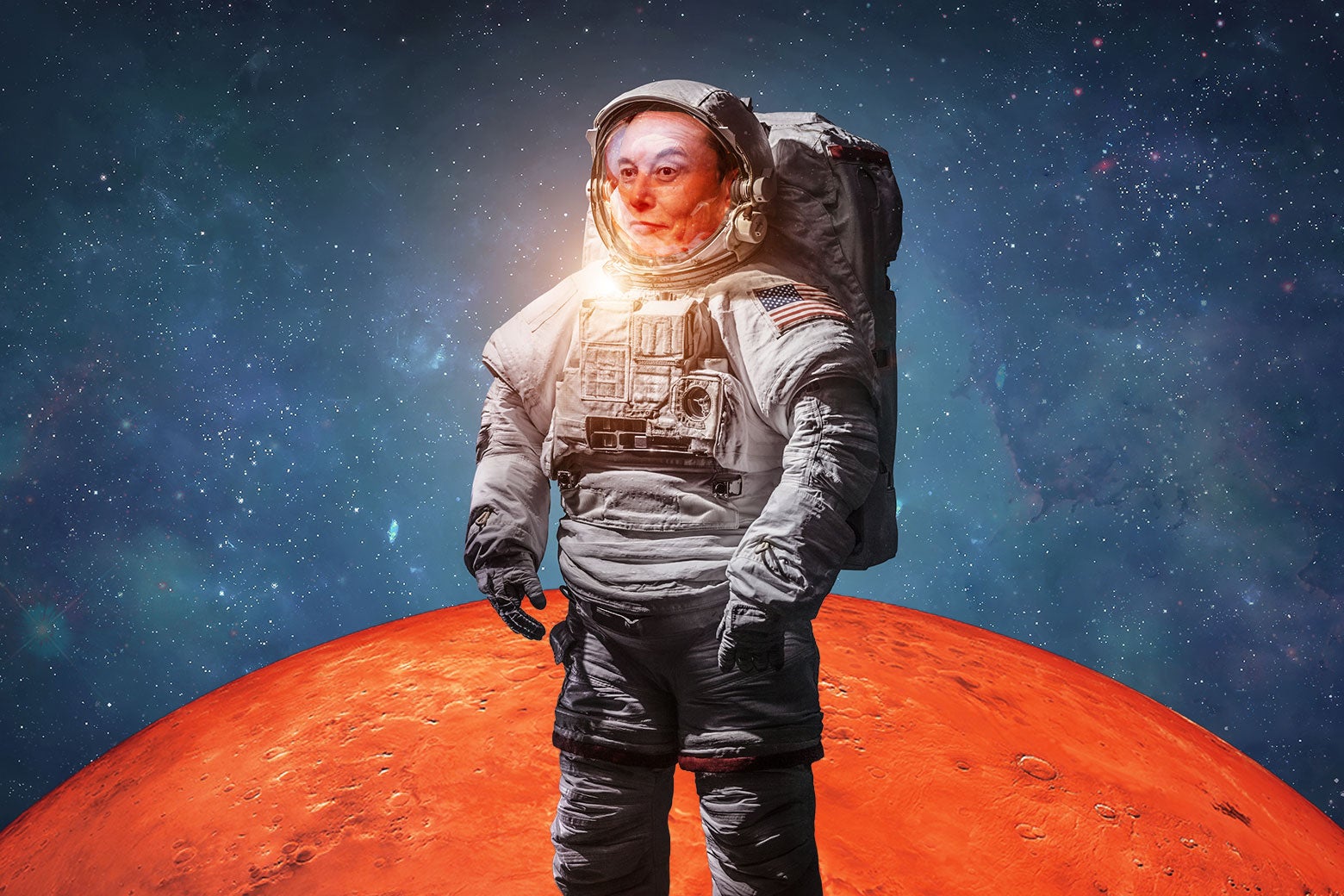
Unfortunately, looking at the situation with an adult’s perspective, the reality is quite different. Elon Musk has recently stated that SpaceX will, at least right now, no longer be focusing on traveling to Mars—apparently the newest fantasy is cities on the moon—and it’s not hard to see why. There are innumerable challenges with human space travel, but one huge one that we have no good solutions for is that space is really, really bad for your health.
There are a few main issues that we know about when it comes to space and human well-being. The first is obvious: confinement and isolation. A return journey to Mars would be anywhere from two and a half to three years long, and any intrepid adventurers would have to spend that entire time in cramped, unpleasant spaces with a handful of other people. We have some solutions to this issue—space psychologists, for example, can help astronauts function as a team without losing their minds. There’s a really good podcast series called The Habitat on one series of experiments testing how humans could get through the group confinement of a Mars trip. But it’s still a persistent and worrisome problem.
The next issue is space radiation. The Earth’s atmosphere provides us with a great deal of protection from radiation of all kinds, but once you’re out in space, the risks of cancer and other organ damage start piling up quickly. Most people know that even taking a commercial flight exposes you to a dose of radiation—about one X-ray’s worth. That’s not a big deal, but if you get up higher, it is. The astronauts on the International Space Station receive a dose of around 240 to 480 X-rays on a six-month jaunt up in the exosphere. NASA estimated in 2017 that a human-crewed Mars mission lasting three years would result in those people receiving 3,600 X-rays’ worth of radiation over the course of their travel.
Advertisement
Please first to comment




Stay Connected
Tweets by elonmuskTo get the latest tweets please make sure you are logged in on X on this browser.