





 Energy




We're not ready for self-defense
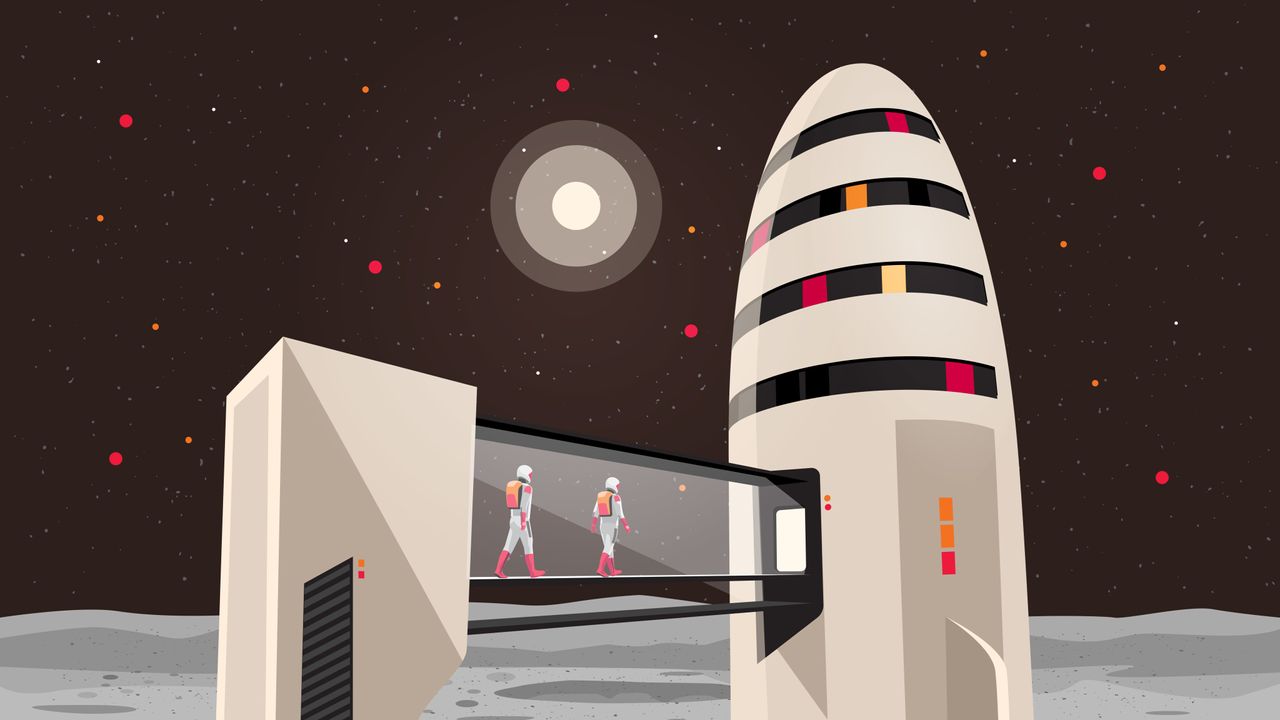
Humans on the moon would need hefty building materials to protect lunar habitats against these hazards. Metal or glass domes, subterranean habitats and housing made of 3D-printed moon soil are all potential options being investigated.
But Ahrens, who also works on lunar risk assessment, doesn't think we're ready to plan construction. For example, if NASA decides to invest in an underground habitat — perhaps the most surefire way to avoid radiation — scientists still have no idea how to dig on the moon, she said.
We have to be very careful not to sell something which [we] don't have
Giuseppe Reibaldi, president of the Moon Village Association
Even with sufficiently protective living quarters, the moon's weaker gravitational pull — just one-sixth that of Earth — may pose health risks. From previous space travel we know that, without the gravitational force humans evolved with, our bones and muscles need significant amounts of exercise to prevent them from withering away. But it wouldn't be practical to lug heavy treadmills, like those used on the International Space Station, to the moon, Urquieta said.
A lack of gravity may also redistribute the body's natural balance of fluids, with potentially disastrous effects. Normally, due to the downward tug of gravity, up to 80% of our blood is in our legs at any given time, Urquieta said. But on the moon, more fluids would flow to the body's upper half, causing loss of blood as the body attempts to rebalance itself, as well as potential swelling at the back of the eye and jugular vein thrombosis, a condition that causes potentially fatal blood clots in the neck. Compared to zero gravity, lunar partial gravity may or may not pose similar health risks. Urquieta said researchers won't know until people spend some time there.
The future of lunar settlement
Ultimately, Ahrens said, these challenges boil down to the need for more data, which scientists are hoping to gather with missions like NASA's Artemis campaign to return humans to the lunar surface as soon as 2028. But she envisions a much slower timeline than Musk's and Isaacman's plans; scientists haven't even taken a sample of the moon's ice yet — a resource lunar settlement planners are banking on.
Depending on its depth and composition, lunar ice could provide water, rocket fuel and rare earth metals. But until scientists get a physical sample of ice, they can't rely on its usefulness or economic prospects. For now, scientific knowledge of the ice's actual chemical composition is very limited: "We know it's cold, and we kind of know where it is," Ahrens said.
When it comes to the moon and its offerings, "we have to be very careful not to sell something which [we] don't have," said Giuseppe Reibaldi, president of the Moon Village Association, a non-profit group focused on international collaboration in lunar activities.
NASA concept art showing a possible lunar living structure made of glass. The logistics of large-scale construction on the moon remain one of many open questions.
(Image credit: NASA/Martin Bermudez)
Please first to comment




Stay Connected
Tweets by elonmuskTo get the latest tweets please make sure you are logged in on X on this browser.