




 Energy

Link copied
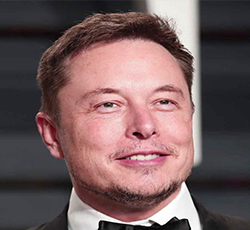
Elon Musk on the witness stand, with his counsel Steven Molo. (Vicki Behringer via Courthouse News)
OAKLAND, Calif. (CN) — The richest man in the world continued his testimony Wednesday over his claims against one of the most profitable artificial intelligence companies in Silicon Valley, saying OpenAI “stole a charity.”
“I was a fool who provided funding for a startup,” Elon Musk said under questioning from his attorney Steven Molo. “I gave them $38 million for a nonprofit and they ended up with an $800 billion for-profit company.”
Referring to OpenAI’s original mission to create and provide artificial general intelligence for the “benefit of humanity,” Musk accuses the company of diverting from that mission. The company started as a nonprofit entity with a reported commitment to an “open-sourced” technology.
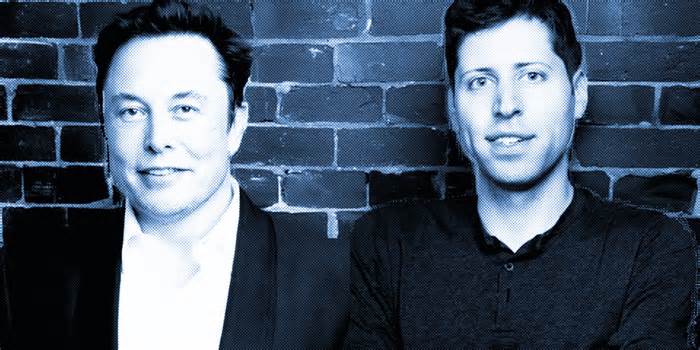
In the second day of trial, much of Molo’s questioning relied on emails about the structure and mission of the company between Musk; Sam Altman, a co-founder and current CEO of OpenAI; Greg Brockman, another OpenAI co-founder; and Ilya Sutskever, OpenAI’s chief scientist.
The emails dated from the OpenAI’s inception in 2015, to after Musk left OpenAI’s board in 2018 and through 2022 — when Altman inked a multi-billion-dollar deal with Microsoft and when Musk said a nonprofit “can’t have a $20 billion valuation” and called Altman’s maneuvers a “bait and switch.”
The nine-person jury’s decision on the claims may turn on a specific document sent to Musk on Aug. 31, 2018 from Altman. A summary principal of terms, a document regarding the corporate structure and funding of OpenAI, said in one of its bolded headlines “any contribution should be seen in the spirit of a donation.” Musk claimed to have read that headline but not the rest of the document, which noted structuring OpenAI as a for-profit company.
“Do you expect that the fine print would contradict what was said in the headline?” Musk asked rhetorically while on the stand.
In cross-examination, OpenAI’s lead counsel William Savitt asked Musk about his tax deductions due to his donations to OpenAI and rent paid for office space in San Francisco.
“Your questions are not simple; they are designed to trick me,” Musk said to Savitt when asked about some of the emails discussing a possible for-profit arm to OpenAI. “Any simple answer would mislead the jury.”
Musk was wary to answer any questions by Savitt, asking frequently for more context. U.S. District Judge Yvonne Gonzalez Rogers stepped in, clarifying Musk can just answer “yes” or “no.”
Savitt made a point of asking Musk if it aligned with OpenAI’s mission to try and recruit OpenAI employees for positions at Neuralink and Tesla, two of Musk’s for-profit companies.
“It’s a free world,” Musk answered. He said he couldn’t stop anyone from trying to hire talented people from another company.
Savitt brought up a text message exchange between Musk and Shivon Zilis, an OpenAI board member and romantic partner of Musk. In the exchange, Musk said Zilis should stay “close and friendly” to “keep info flowing” after Musk acrimoniously left the startup’s board in February 2018.
Savitt said his line of questioning was relevant to Musk’s intentions after leaving OpenAI and trying to develop AI through Tesla while bankrupting OpenAI after his departure.
Musk said he was starting to “get uncomfortable” with the direction the nonprofit was going and no longer wanted to fund the venture through quarterly $5 million donations. However, he still wanted to be informed on the nonprofit’s direction and leadership. Musk, Altman and Brockman co-founded OpenAI in 2015.
Musk claims in his 2024 suit that Altman deceived him after bringing in technical talent and bankrolling the project with millions of dollars, while Altman made deals with other investors to ultimately make the nonprofit into a for-profit company behind his back.
Musk brings breach of charitable trust and unjust enrichment claims, seeking $150 billion in compensatory and punitive damages from OpenAI and Microsoft. In 2019, Altman partnered with Microsoft after the software company agreed to invest $1 billion and later made another $10 billion investment.
Microsoft is a co-defendant in the case over a claim of aiding and abetting the breach of charitable trust, with Musk claiming the company benefited from his early donations.
Rogers, a Barack Obama appointee, sustained many objections on both sides. She made clear that Savitt’s questions to Musk about OpenAI’s report card on AI safety and his opinion that OpenAI reduced focus on safety because it became a for-profit company were highly contested. Savitt said xAI, Musk’s AI company, would also be in that category, as a for-profit company.
“You do not get to make grandiose proclamations on safety without some sort of cross-examination,” Rogers said to Molo about Musk’s testimony.
Musk is no stranger to the witness stand, having testified in March at a jury trial that found he defrauded Twitter investors during his takeover of the $44 billion social media company.
Altman and Brockman were present in the courtroom Wednesday. Ari Emanuel, a Musk ally and CEO of Endeavor, an entertainment and talent agency, was also present Tuesday and Wednesday, sitting in the first row of the gallery near Musk.
Wednesday’s questioning of Musk took the entire court day. Musk’s attorneys said Jared Birchall, the CEO of Neuralink and Musk’s personal business manager, along with Stuart Russell, an expert and AI safety, and OpenAI co-founder Greg Brockman will be the next witnesses called.
Categories /
Please first to comment



Stay Connected
Tweets by elonmuskTo get the latest tweets please make sure you are logged in on X on this browser.