




 Energy

Link copied
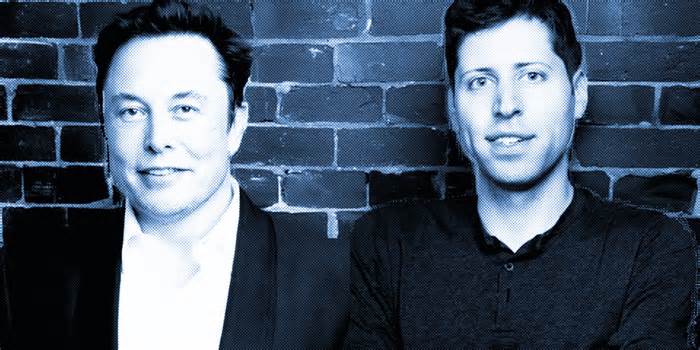
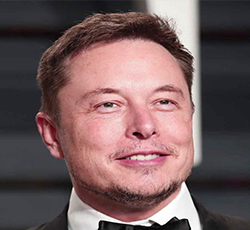
Sam Altman (left) and Elon Musk (right) clashed in court over OpenAI's upcoming conversion to a for-profit company. (AP Photo by Alastair Grant photo / AP Photo by Benjamin Fanjoy photo via Courthouse News)
OAKLAND, Calif. (CN) — A landmark trial between two tech billionaires continued Monday with OpenAI’s number two executive testifying against Elon Musk’s deception claims over the company’s restructuring to include a for-profit arm.
Musk, the world’s richest person, brings breach of charitable trust and unjust enrichment claims against OpenAI CEO Sam Altman and President Greg Brockman stemming from a 2024 lawsuit and seeks $150 billion in compensatory and punitive damages from OpenAI and Microsoft over violating its original mission. Musk, Altman, Brockman and former OpenAI chief scientist Ilya Sutskever co-founded OpenAI in 2015.
Microsoft is a co-defendant in the case over a claim of aiding and abetting the breach of charitable trust, with Musk claiming the company benefited from his early donations. Altman partnered with Microsoft in 2019 after the software company agreed to invest $1 billion and later made another $10 billion investment in its for-profit arm. OpenAI’s for-profit is currently valued at $840 billion, with Microsoft’s 27% stake in the for-profit valued at around $200 billion.
Brockman took the stand in the high-profile jury trial playing out at the Ronald V. Dellums courthouse in Oakland. Brockman admitted that while he initially told other potential OpenAI donors in its early days as a nonprofit — such as Musk, venture capitalist Reid Hoffman and former Yahoo CEO Marissa Mayer — to donate $100,000 personally, he never did. Brockman’s stake in OpenAI’s for-profit arm is currently worth between $20 billion and $30 billion.
During questioning by Musk’s attorney Steven Molo, Brockman said he believes OpenAI, the creator of the widely used ChatGPT model, still has the moral high ground and did not breach OpenAI’s mission with a “primary fiduciary duty to benefit humanity.”
Molo continued to grill Brockman on some of his statements in his personal journal, including whether it was possible to “take me to $1 billion” with Musk as CEO of the company, one of Musk’s demands when discussing a capped for-profit arm in the first year of the nonprofit. Molo attempted to show the nine-person jury Brockman’s financial interests in other companies, such as AI cloud-computing company CoreWeave and fusion company Helion Energy that struck deals with OpenAI, were problematic and how, in emails, Brockman said that “our biggest tool is the moral high ground” and his dedication to the nonprofit, while his journal showed a different story.
“Another realization from this is that it’d be wrong to steal the nonprofit from him to convert to a b-corp without him,” Brockman wrote in his journal about Musk. “That’d be pretty morally bankrupt and he’s really not an idiot.”
Molo pointedly asked Brockman, if he was “good with $1 billion,” why hasn’t he donated his $29 billion in equity back into OpenAI’s nonprofit?
“I don’t think about it like that,” said Brockman. He said OpenAI’s for-profit entity was “built through blood, sweat and tears,” and the nonprofit has $150 billion in assets from the for-profit.
He also described the first night he met Musk after he, Musk and Altman were in discussions through emails about starting a nonprofit AI enterprise in 2015. At the Rosewood Sand Hill luxury hotel in Menlo Park, Brockman said he remembered Musk’s first words to him over dinner, asking if Demis Hassabis, the current CEO of Google’s DeepMind AI technology, was evil.
It was “not an uncommon view in Silicon Valley” at the time, Brockman said.
OpenAI’s counsel, Sarah Eddy, was more conceptual with her questions to Brockman, asking him what he does as the president of OpenAI. Brockman explained the goal of OpenAI to bring artificial general intelligence available for the benefit of humanity is about 80% of the way there, saying AGI is “smart and capable but not fully integrated with the world.”
The first witness of the day was called by the plaintiff. Stuart Russell, an AI expert and a professor of computer science at University of California, Berkeley, was asked extensively about AI safety and risks. It was revealed during questioning that Russell was paid $5,000 an hour for his expert report by Excession LLC, Musk’s family office.
Before testimony began, U.S. District Judge Yvonne Gonzalez Rogers was no-nonsense with both parties’ attorneys. The Barack Obama appointee made clear Russell’s testimony was limited to his previous deposition.
Rogers said she was “trying to understand the probative value of that testimony” before Russell took the stand.
The trial continues Tuesday with Shivon Zilis, a former OpenAI board member and a romantic partner of Musk, likely to testify.
Categories /
Please first to comment


Stay Connected
Tweets by elonmuskTo get the latest tweets please make sure you are logged in on X on this browser.