




 Energy




Credit: Tesla
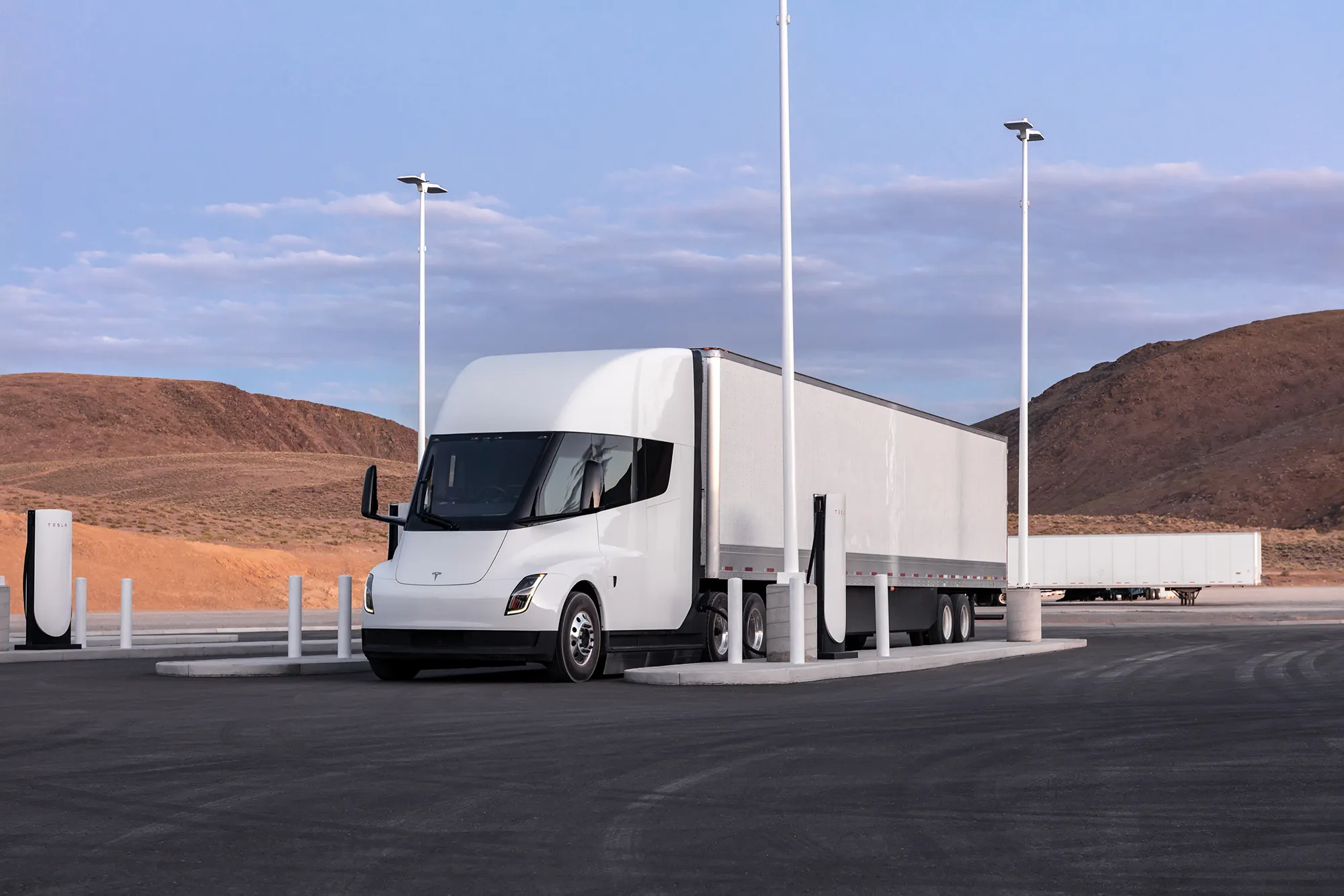
Tesla Inc. (NASDAQ: TSLA) finally put its long-delayed Semi truck into mass-market production last week, a milestone nine years in the making since Elon Musk first unveiled the vehicle in 2017. The Nevada factory has begun rolling out units at volume, and the headlines have followed accordingly. But while the world watches Tesla’s trucking ambitions unfold, China has been quietly building a freight electrification machine that is already operating at a scale the American EV giant cannot yet match.
Data from the past twelve months tells a striking story. Roughly eleven percent of heavy long-distance trucks sold in China over that period were fully battery-electric, with smaller commercial vehicles reaching a penetration rate of around twenty percent. These are not projections or targets — they are current market realities that reflect years of industrial policy, infrastructure investment, and cutthroat domestic competition.
BYD Co. (OTC: BYDDY) sits at the centre of this shift, and the broader Chinese electric trucking sector is on the verge of what analysts are calling a BYD moment — the point at which EVs stop being a niche and become the obvious default. That inflection point already happened in the passenger car market, and freight is following the same arc, only faster.
The competitive threat extends beyond BYD. Chinese startup Windrose has already made its first commercial delivery in the United States, putting its Global E700 Class 8 electric truck on American roads ahead of Tesla’s own full-scale rollout. The vehicle, which bears a striking visual resemblance to the Tesla Semi, is certified across North and South America, Europe, and Asia, and has attracted interest from major corporations including Nike.
Tesla’s Semi is priced at approximately $290,000 for the 500-mile long-range variant — below the industry average for Class 8 electric trucks but still a significant capital commitment for fleet operators. The vehicle offers up to 500 miles of range on a single charge and features three independent rear motors delivering around 1,073 horsepower. These are competitive specifications, but Chinese rivals are not standing still on performance or price.
TSLA shares have declined approximately seventeen percent year-to-date, making the stock the worst performer among the so-called Magnificent Seven group. Investor sentiment has stayed cautious even as the Semi production milestone landed, with concerns about slowing momentum in China weighing on the broader Tesla thesis. The company’s broader 2026 manufacturing push also includes the Cybercab robotaxi and Megapack 3 energy storage system.
The deeper problem for Tesla is one of timing. Electric trucking is no longer a proof-of-concept market — it is becoming a mass-market industry, and China built that market while Tesla was still tooling its factory. Western incumbents including Daimler Truck’s Freightliner eCascadia and Volvo’s VNR Electric are also competing in the segment, adding further pressure from both sides.
Tesla’s Semi may yet carve out a meaningful position in North American freight, particularly given the political and logistical difficulties Chinese manufacturers face when exporting to the United States at scale. But the window for Tesla to define the category on its own terms has almost certainly closed. China has already arrived.
Related Posts:
Please first to comment



Stay Connected
Tweets by elonmuskTo get the latest tweets please make sure you are logged in on X on this browser.