



 Energy


Link copied
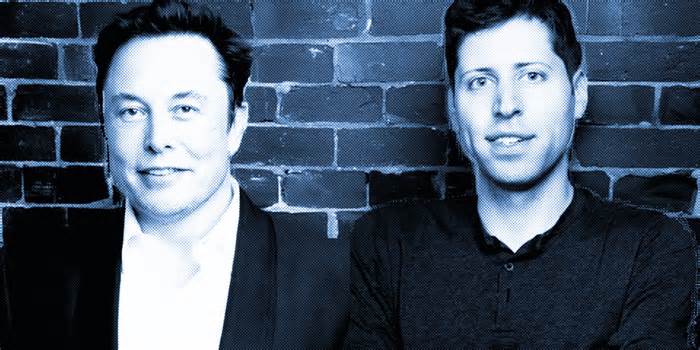
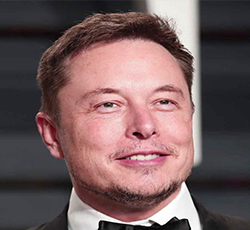
Sam Altman (left) and Elon Musk (right) clashed in court over OpenAI's upcoming conversion to a for-profit company. (AP Photo by Alastair Grant photo / AP Photo by Benjamin Fanjoy photo via Courthouse News)
OAKLAND, Calif. (CN) — A unanimous nine-person jury found one of the highest valued artificial intelligence companies in the world not liable Monday in a blockbuster case that pitted two tech billionaires against each other for the future of the highly publicized AI organization OpenAI.
The jury deliberated just two hours before finding Musk’s claims fell outside the statute of limitations, leading U.S. District Judge Yvonne Gonzalez Rogers to dismiss the case. The verdict also cleared Microsoft of liability in the case.
OpenAI’s attorneys including lead counsel William Savitt wore smiles while leaving the courtroom. They broke into applause heard through a closed door in a room outside the court.
Elon Musk, the world’s richest person, brought breach of charitable trust and unjust enrichment claims against OpenAI and its CEO Sam Altman and current OpenAI president Greg Brockman in 2024. Altman and Brockman co-founded the OpenAI nonprofit with Musk and OpenAI chief scientist Ilya Sutskever in 2015.
During its decade of growth, OpenAI has weathered power struggles, governance collapse, and a total restructure of the organization from its humble beginnings as a nonprofit AI research lab, working mostly off Musk’s early donations, to become a Silicon Valley wunderkind, including over $13 billion in investment and a partnership with Microsoft.
Musk claimed the OpenAI executives deceived him about moving OpenAI from a nonprofit to a for-profit entity that no longer had a “fiduciary duty to benefit humanity.” He said the OpenAI executives “stole a charity,” during his testimony in the three-week trial.
Rogers instructed the jury to first decide whether Musk’s lawsuit was time-barred — typically, California’s statute of limitations on a breach of charitable trust claim is three to four years— and it found the defendants proved Musk had missed the window. Musk acrimoniously left the startup in February 2018, and his last monetary contribution to OpenAI was in 2020. He sued in 2024.
Right after the verdict was read, Rogers, a Barack Obama appointee, dismissed Musk’s claims.
“There is a substantial amount of evidence to support the jury’s finding,” she said.
Musk’s lead counsel Steven Molo told the court that Musk reserves the right to appeal.
“We’re disappointed that the jury found against us on the technical legal issue of statute of limitations,” Molo said in a statement. “There’s been no finding on the breach of charitable trust claim, and we believe the evidence on that was extremely strong. We plan to appeal.”
Before excusing the jury, Rogers recited a few quotes from Supreme Court Justice William O. Douglas, a gesture she is known to do to show her gratitude for the jury’s service.
“A jury reflects the attitudes and mores of the community from which it is drawn,” she said. “It is not present the next day to be criticized. It is the one government agency that has no ambition.”
Musk, Altman and Brockman were not present in the courtroom Monday to hear the verdict. Altman was in the courtroom for most of the trial, while Musk was present for opening statements and the first two days when he testified.
Currently, OpenAI’s for-profit entity is valued at over $800 billion from approximately $175 billion in investment, which includes the value of the nonprofit’s IP that was transferred into the for-profit, in exchange for equity in the for-profit. OpenAI’s nonprofit, OpenAI Foundation, has $200 billion in assets, with Altman claiming it to be one of the “most well-funded nonprofits in the world.”
By early 2018, an agreement between the OpenAI co-founders of how to structure the organization failed to materialize and Musk resigned from the company’s board but continued paying rent for an office space in San Francisco through 2020. Musk founded his own for-profit AI company, xAI, in 2023.
Altman partnered with Microsoft in 2019 after the software company agreed to invest $1 billion and later made another $10 billion investment in its for-profit arm. Microsoft’s 27% stake in the for-profit is valued at around $200 billion.
Musk sought $150 billion in compensatory and punitive damages from OpenAI and Microsoft for betraying its original nonprofit mission. He also claimed Microsoft aided and abetted the breach of charitable trust and that the company benefited from his early donations of approximately $37 million.
“The facts and the timeline in this case have long been clear, and we welcome the jury’s decision to dismiss these claims as untimely,” a Microsoft spokesperson said in a statement. “We remain committed to our work with OpenAI to advance and scale AI for people and organizations around the world.”
The trial brought a who’s who of the Bay Area tech world to the Ronald V. Dellums Courthouse in Oakland, where news camera people set up shop outside to get a glimpse of the parties, as well as Microsoft CEO Satya Nadella, former chief technology officer of Facebook and current OpenAI board chair Bret Taylor, Josh Achiam, OpenAI’s chief futurist, and Shivon Zilis, a former OpenAI board member and mother to four of Musk’s children.
“It was an important issue to be tried,” Rogers told the court before exiting the courtroom. “And it’s important to have trials, to have clarity.”
OpenAI and its attorneys did not respond to a request for comment by press time.
Categories /
Please first to comment


Stay Connected
Tweets by elonmuskTo get the latest tweets please make sure you are logged in on X on this browser.