




 Energy



May 21, 2026 — 6:35pm
Save Trump’s war has been a gift to an industry he detests
With China’s economy also slowing, sales of battery-electric and plug-in hybrid cars in China were down 14 per cent in the first 19 days of April from the same period last year. But sales of gasoline-powered cars plummeted almost 40 per cent.
Geely’s versatility “has become a clear competitive advantage,” said David Zhang, dean of vehicle technology research at the Jiangxi New Energy Technology Institute.
With prices at the pump rising everywhere, Geely said last month that it was converting all of its remaining gasoline vehicles to gas-electric hybrids.
Advertisement
“Every one of their vehicles will be really fuel efficient – that will be another advantage,” said Yale Zhang, the managing director of Automotive Foresight, a Shanghai consulting firm.
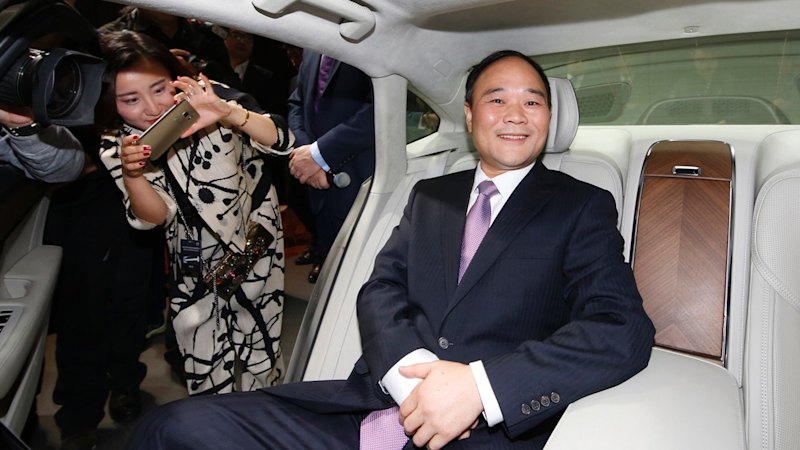
Zhejiang Geely, privately held by its founder and chair, Li Shufu, 62, controls a wide network of automakers. It discloses little financial information but has set a target to generate 30 per cent of its sales outside China by 2030.
Shares in Zhejiang Geely’s largest unit, Geely Automobile Holdings, trade in Hong Kong. It sold 3 million cars last year, up 39 per cent from a year earlier. Revenue rose 25 per cent as a price war in China pushed down vehicle prices.
Geely has built a business model designed to handle volatility.
NYT
Geely started making cars in 1998 when it began supplying taxis to Chinese fleets. In less than three decades, Zhejiang Geely has grown into a global automaker whose sales now approach those of the 123-year-old Ford Motor.
Advertisement
Li’s path was similarly unlikely. As a teenager, he used money set aside for college to buy a camera and start a small business photographing tourists. He then moved into manufacturing components for refrigerators, motorcycles and cars before building entire vehicles in Taizhou, his hometown in coastal Zhejiang province.
By 2006, Geely was selling inexpensive subcompacts for first-time buyers with simple, low-cost designs that looked starkly utilitarian by Western standards.
In less than three decades, Zhejiang Geely has grown into a global automaker whose sales now approach those of the 123-year-old Ford Motor.
That did not deter Li’s global ambitions. In a 2006 interview, he urged Ford to sell Jaguar or Volvo – two of the American automaker’s many brands at the time – to Geely. The idea seemed far-fetched, but after Ford ran into difficulties during the global financial crisis, Li borrowed heavily to buy Volvo, a Swedish brand, in 2010. Zhejiang Geely has since revived Volvo.
From early on, Li focused on mastering automotive technology. He expressed admiration in 2006 for German automakers DaimlerChrysler and BMW, then leaders in hybrid-car technology, but was determined not to rely on others. Geely would have to build its own technology “from scratch.”
Advertisement
In a full-circle moment, he paid $US9 billion ($12.6 billion) in 2018 to acquire a 9.69 per cent stake in Daimler, which has repeatedly changed its name and is now known as Mercedes-Benz Group.
Geely has built a broad portfolio of domestic and international brands. It acquired the London Taxi Co., which makes London’s iconic cabs, in 2013. It bought a 51 per cent stake in British sports-car maker Lotus in 2017 along with a 49.9 per cent stake in Proton, a Malaysian automaker. For electric vehicles, it has created brands like Polestar, an affiliate of Volvo, and Zeekr, a premium, technology-heavy offering with cars priced as high as $US132,000.
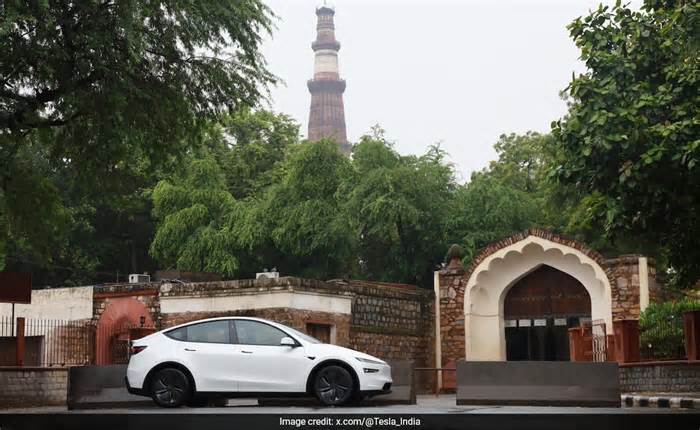
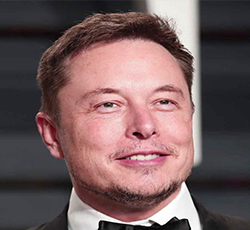
Elon Musk’s Tesla is under increasing pressure from its Chinese rivals.
AP
While moving a lot of production to China, Geely maintains design studios and factories in Europe, and it opened a Volvo factory in South Carolina. This has helped Geely sidestep trade barriers in Western markets.
Geely still faces two big challenges, said Michael Dunne, a long-time consultant on China’s car industry. Its portfolio of brands requires high sales to remain profitable. At the same time, state-owned carmakers in China are dragging down the industry, driving endless price wars and expanding capacity with backing from local governments and state banks.
Advertisement
“Profits have vanished” for car sales inside China, Dunne said. Geely remains profitable as a private company to a considerable extent because of its exports. But across China’s auto industry, he added, “the state-owned enterprises are the ones to bet on” to be the last ones standing.
Related Article
Please first to comment



Stay Connected
Tweets by elonmuskTo get the latest tweets please make sure you are logged in on X on this browser.