




 Energy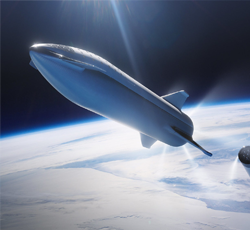



Key Points
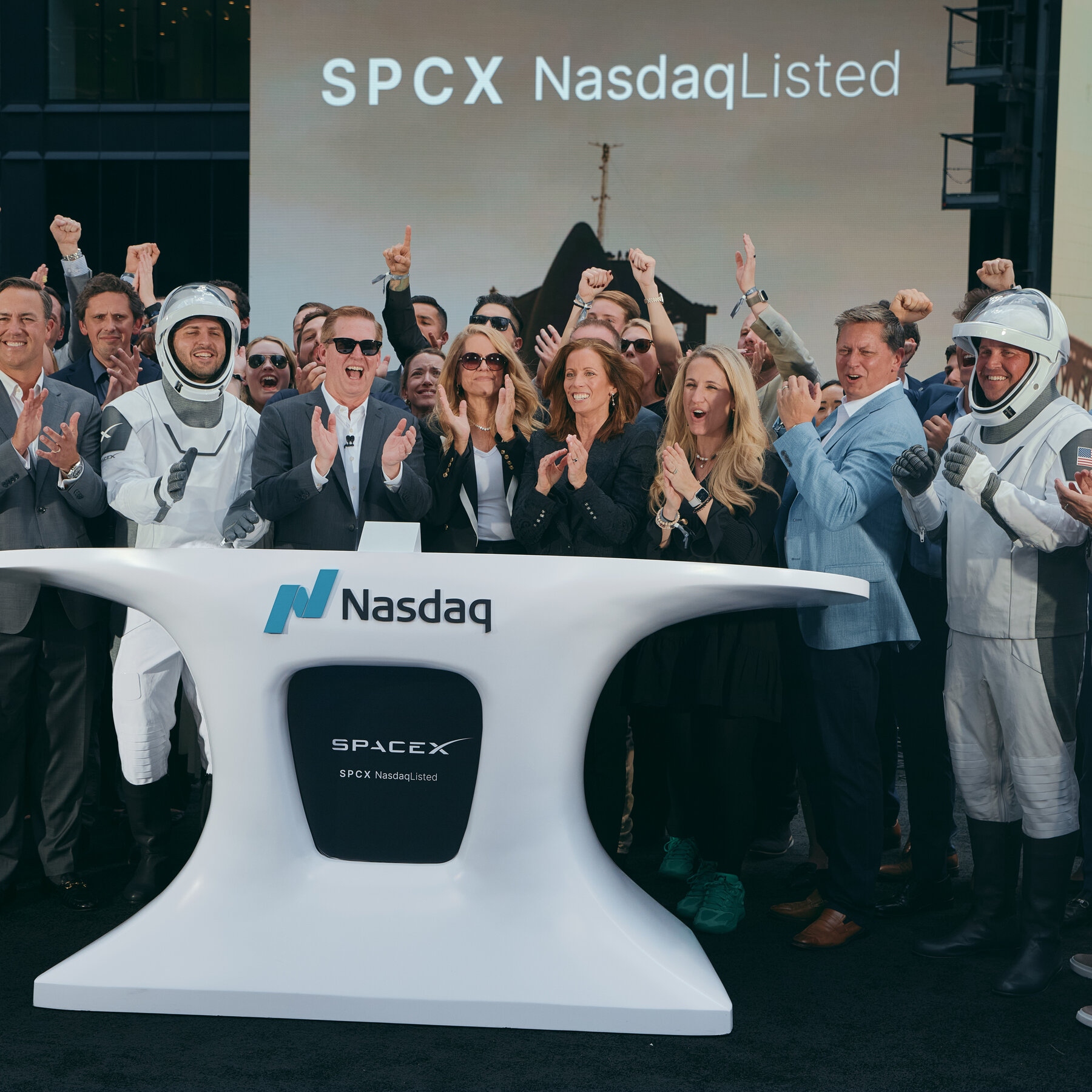
Gwynne Shotwell, long Elon Musk's second-in-command at SpaceX, spoke exclusively with CNBC ahead of her company's highly anticipated IPO.
SpaceX is hitting the Nasdaq on Friday after a record-setting $75 billion initial share sale.
"I wasn't sure we would go public," Shotwell said. "It actually feels like the right time now."
In this article News Videos
Engineering advanced technology to tackle tough business cases others have deemed unviable, and then commercializing them, is the SpaceX playbook.
With rocketry, the company underbid competitors for launch contracts, implemented reusable boosters, and drastically drove down the cost to fly to space. Making Starlink work involved sending satellites to low Earth orbit and doing so economically. Now, with artificial intelligence infrastructure, SpaceX has its sights set on building a vertically integrated tech stack stretching into space and encompassing everything from chips to AI applications.
With a record $75 billion IPO, SpaceX carries a stratospheric valuation of nearly $1.77 trillion. At that market cap, SpaceX would debut as the seventh most-valuable company in the U.S., surpassing Meta
and Musk's other public company, Tesla
. It would also be worth more than the entire S&P 500 aerospace and defense group.
Skeptics on Wall Street are questioning the math. The valuation suggests an estimated 2026 revenue multiple of 40 and an adjusted earnings multiple of 175.
SpaceX wants to become the ultimate product-driven infrastructure company, a modern-day railroad for the new industrial revolution. But unlike Union Pacific in the 19th century, SpaceX is also looking to own the supply chain and at least some of the factories along the route.
Musk has sold investors on hard things in the past. In Tesla's 16 years as a public company, he's driven the market cap up on a promise of humanoid robots and self-driving cars.
"We've been feeling over the last few years a lot of pressure from everyday Americans and our friends that wanted to buy stock, and there was just no way for these folks to get in," said Shotwell.
Convergence of space and AI
 Shotwell stressed that SpaceX's horizons are very long term.
"I do not want to focus on quarterly earnings," she said. "I'm not saying we're not going to do right by our investors, but what folks who invest in SpaceX need to know is that what we're doing is very futuristic."
SpaceX's clearest moat is in rocket launching. Its Falcon fleet currently dominates that market, accounting for roughly 80% of global mass launched to orbit since 2023. Last year SpaceX launched 165 orbital missions, with 157 of those utilizing reused rocket boosters. The cost to send cargo to low Earth orbit has fallen by more than 90% from the Space Shuttle to the Falcon 9.
Most of those launches, have been by SpaceX for SpaceX, as the company rapidly deploys its Starlink broadband constellation. With more than 10 million subscribers accessing the internet via a constellation of roughly 9,600 satellites and growing, Starlink is the company's profit engine. The connectivity segment also includes the nascent Starlink Mobile direct-to-cell business and Starshield, which military experts say is reshaping warfighting.
Connectivity touts high margins and generates cash for heavy investments in other parts of the company. That's especially important for the AI segment, which is primarily xAI after SpaceX acquired that part of Musk's empire earlier this year. SpaceX said capital expenditures for AI totaled $12.7 billion in 2025 and $7.7 billion in the first quarter of 2026.Â
With xAI comes the Grok large language model and X, formerly known as Twitter. And to entice developers, the company struck a deal with AI coding upstart Cursor, with an option to buy the business for $60 billion in stock.
Then there's the Terafab semiconductor fab and computing mega project that it's jointly developing with Tesla. Intel
recently signed on as a partner and supplier. The cost of Terafab is expected to ultimately run into the hundreds of billions of dollars.
And in and around Memphis, Tennessee, SpaceX has the Colossus data centers. SpaceX has recently been striking multibillion-dollar deals, first with Anthropic and then with Google
, to provide them with spare compute capacity. The monthly payments, as long as they exist, will help SpaceX offset its hefty capital spending.
"I see us not only building the tech stack required for AI and operating the X platform, but we are builders of data centers, both here on Earth and in space," said Shotwell. "I believe we will continue to provide that capability to others actually. We will never sell compute capacity that we actually need, which is why we wanted the ability to have these contracts be short term if necessary."Cloud infrastructure is a highly competitive business. SpaceX is betting it moves into orbit, solving for a number of big earthy issues like scarcity of power, land and water preservation, and community pushback.Â
watch now
Please first to comment



Stay Connected
Tweets by elonmuskTo get the latest tweets please make sure you are logged in on X on this browser.