




 Energy




April 19, 2021 2:47 pm EST
ABC News
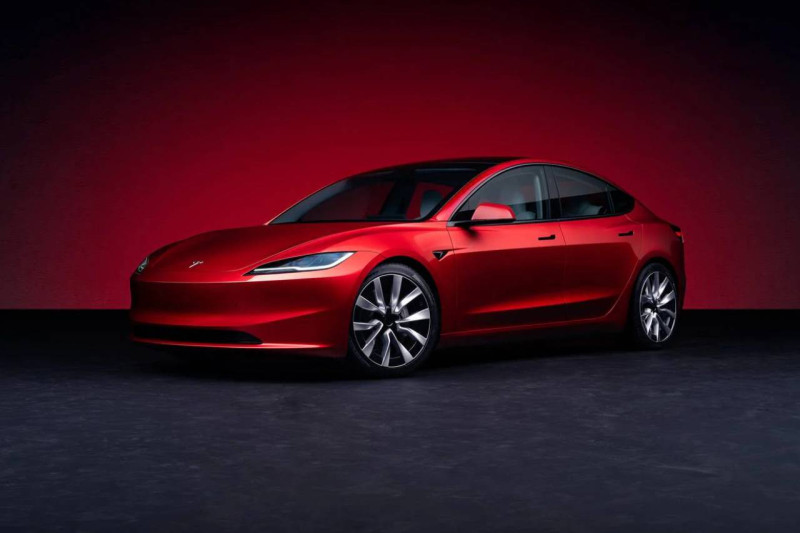
Over the weekend, there was a horrific crash in a Tesla Model S that claimed two lives, It took firefighters over four hours to extinguish the burning car. Significantly, crash investigators are certain that nobody was in the driver's seat at the time of the crash; the bodies were found in the passenger's seat and the back seat. Our reporting of this story generated a lot of comments wondering why we cover Tesla crashes like these, and speculating that there's some sort of organized vendetta against the company. This happens every time we cover a Tesla crash or a video of someone sleeping at the wheel of a Tesla using Tesla's Level 2 semi-autonomous system, which the company calls Autopilot. I figured I may as well explain our thinking, for what it's worth.
I should be clear in that I don't actually think there's a lot to be confused about with regard to why we cover Tesla crashes, but I suspect that some of our commenters may be getting tired of making the same accusations again and again in the comments, so perhaps if we just lay out all the thinking in one place it'll be helpful for everyone.
Two men dead after fiery crash in Tesla Model S.
"[Investigators] are 100-percent certain that no one was in the driver seat driving that vehicle at the time of impact," Harris County Precinct 4 Constable Mark Herman said. "They are positive." #KHOU11 https://t.co/q57qfIXT4f pic.twitter.com/eQMwpSMLt2 Jalopnik
I think it's hilarious that I have to say some of these things, but I guess I may as well: nobody at Jalopnik gets paid any more or less for saying anything positive or negative about any company. I once tried to see if I could get DKW to kick me a check every time I wrote about one of their cars, but they claim that since "they haven't been in business since 1969" such a deal wouldn't help them, which is bullshit.
Also, while I may personally get erections for any number of weird and confusing stimuli, I do not get them for "shitting on Tesla."
The honest truth is that it would be absolute madness not to write about Tesla, the issues with their technology, or dramatic crashes like these, not because of the callow and obvious reason that they get people clicking on stories, but because there is real, genuine news involved here.
As many, many Tesla enthusiasts like to point out, Tesla is a different kind of car company, and as such they're trying things other carmakers aren't; they're pushing the boundaries of automotive technology in many arenas.
I absolutely agree with this, and I think Tesla should get lots of attention for the innovative things they do and the tech they develop. But that attention should also be directed at Tesla when things go wrong as well as when they go right.
Yes, cars wreck all the time. No question, no doubt. But the reasons conventional cars crash are quite well understood, and, when they're not, it makes sense that we should cover it.
When a carmaker's particular technological decisions cause people to get killed, we cover it, like we did when Star Trek actor Anton Yelchin was killed in an accident with a Jeep that had a notoriously problematic shifter design, for example.
The reason we aggressively cover Tesla wrecks that appear to involve their semi-automated driving system, Autopilot, is because we're at a fascinating transition point in automotive development, and these semi-autonomous systems are a new factor in how we as humans interact with our cars. When those systems are or appear to be a factor in a car crash, it's our responsibility to report about it, think about it, comment about it, and evaluate if we think these technological approaches make sense.
Yes, there is absolutely, no question, a human factor in all of this, too. It's not just a technological issue. As gets pointed out in every article we write about an Autopilot crash, there are many warnings that tell drivers they have to remain alert, that the system is not actually self-driving, and on and on.
Tesla
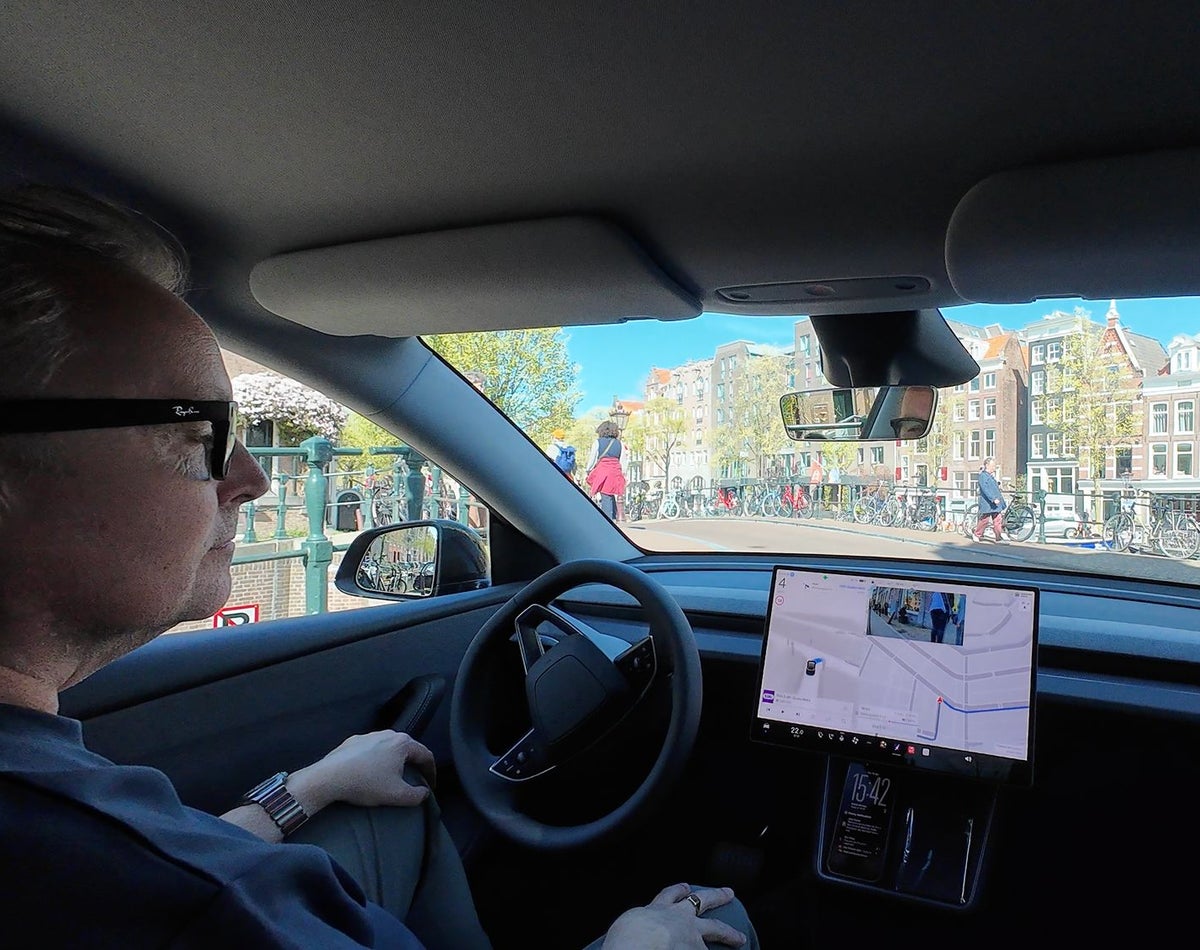
And yet, somehow, people manage to defeat Tesla's driver monitoring systems again and again. Tesla doesn't use a camera to monitor driver's eyes, like GM does with their SuperCruise system, which also limits the roads their system is able to operate on.
There are many ways to defeat Tesla's driver monitoring system, which is just a torque sensor in the steering wheel, one method you can see in this insipid video:
This high level of automation—even if it falls well short of actual self-driving—is still quite new in the automotive world, and we're just learning how people interact with it, though we have known how people tend to act with similar vigilance systems since the 1940s, and the answer is a pretty clearly "not well."
So, while the driver is definitely a factor here, the technology and how it's presented is a huge factor, too. Semi-autonomous systems are not the first dangerous feature cars have that can be abused, not by a long shot. But there are differences.
Take the most obvious and basic example: speed. Pretty much every car is capable of exceeding speed limits, and there are many cars you can buy with absolutely absurd amounts of power—power that, frankly, most drivers are not equipped to handle.
As a culture, we have decided that we want to be able to have access to stupid amount of power in our cars, and we mitigate the inherent issues that presents with a comprehensive system of laws and enforcement—speed cameras, speed limits, heavy fines, license suspensions, jail time, police patrol vehicles, radar guns, insurance and so on—to attempt to keep drivers in check.
Is it irresponsible to sell a car with 700+ horsepower to any idiot? Maybe. Maybe not? I'm not really sure, but what I do know is that there are systems in place to keep excessive speeding under control (successful and otherwise) but of course we still get wrecks because of reckless speed, and we generally do not blame the automakers.
I'm not saying this is good or bad, partially because I'm conflicted. But I do know that it's worth thinking about.
What's different about technology that enables significant and unsafe speeds and technology that does so much driver assisting it lulls drivers into having unrealistic expectations of what the car is capable of is that no car maker is touting how fast their cars go as a revolutionary safety feature.
Dodge has never pitched the Hellcat as the best choice for safe driving, and no Hellcat owners have angrily come at me telling me how I have blood on my hands because I'm standing in the way of everyone driving 700 hp cars.
Level 2 semi-autonomous systems, though, are routinely cast this way. This is a tweet from Tesla's Elon Musk just a couple days ago:
Tesla with Autopilot engaged now approaching 10 times lower chance of accident than average vehicle https://t.co/6lGy52wVhC
Please first to comment


Stay Connected
Tweets by elonmuskTo get the latest tweets please make sure you are logged in on X on this browser.