





 Energy




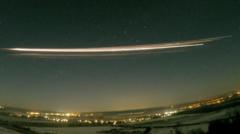
Long exposure photographs showed the Falcon 9 rocket debris over Berlin in 2025
When a SpaceX rocket failure set the skies aflame over western Europe last February, no-one was sure if the debris was also polluting our atmosphere.
Now scientists are directly linking the uncontrolled rocket re-entry to a plume of lithium measured less than 100km above Earth.
It is the first time researchers have drawn a direct link between a known piece of space debris crashing to Earth and pollution levels.
They warn that as SpaceX chief Elon Musk pledges to launch one million satellites in the coming years, this contamination could be the tip of the iceberg.
The scientists were already investigating the problem of pollution from space debris when they realised a SpaceX Falcon 9 had failed in flight on 19 February 2025.
As it blazed through Earth's atmosphere, the rocket vaporised into fireballs over Ireland, England, and Germany before it finally struck Earth.
A man in Komorniki, Poland found a chunk measuring around 1.5m by 1m behind his warehouse.
"We saw the news that this rocket had crashed into Poland. It had flown almost directly over us, and we thought, 'oh, this is a great chance'", explained Prof Robin Wing at the Leibniz Institute of Atmospheric Physics in Germany.
The team fired a laser that detected metal atoms released from the rocket body made of aluminium-lithium.
Gerd Baumgarten
Scientists at the Leibniz Institute of Atmospheric Physics use Lidar lasers to measure the stratosphere and mesophere
Working with Prof John Plane at the University of Leeds, they detected that the amount of lithium in the atmosphere around the rocket increased.
The atmosphere naturally gets about 50-80g daily from small meteors, Wing explains.
"So, a single Falcon 9 rocket has about 30kg, so this is quite a lot more," he says.
"Our largest concern is aluminium and aluminium oxides interacting with the ozone layer," Wing says.
At the moment they do not know the long-term consequences of this pollution on the make-up of Earth's atmosphere, but it is unlikely to be good.
The pollution could disrupt aerosols in the atmosphere and their ability to moderate our climate and temperature.
"This is a new scientific field. It's hard to speculate because it's changing so quickly," Wing says.
He draws parallels to chlorofluorocarbons pollutants released from refrigerators that bore a hole in the ozone layer last century, and were eventually banned.
Adam Borucki
Please first to comment



Stay Connected
Tweets by elonmuskTo get the latest tweets please make sure you are logged in on X on this browser.