



 Energy

Link copied
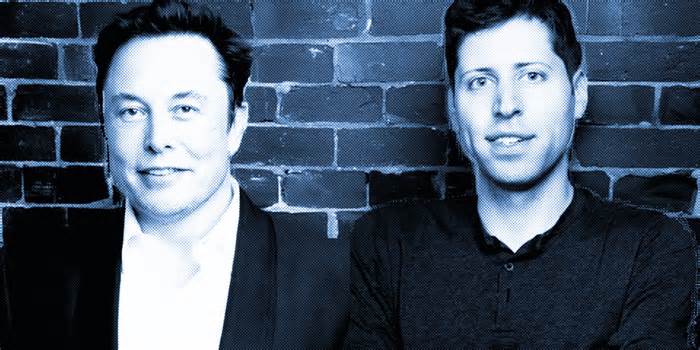
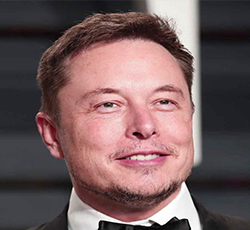
Elon Musk testifying at a jury trial against OpenAI and its CEO Sam Altman. Steven Molo is Musk's lead counsel. (Vicki Behringer via Courthouse News)
OAKLAND, Calif. (CN) — Two tech titans continued Thursday to square off in a federal courtroom, with claims that one of the highest valued artificial intelligence companies, which began as a nonprofit, violated its original mission when it became a for-profit entity.
Elon Musk, the world’s richest person, proceeded on the stand as the first witness in a jury trial that pits him against his OpenAI co-founders, current CEO Sam Altman and President Greg Brockman, with claims in his 2024 lawsuit that he was deceived over several years as the company made exclusive multibillion-dollar deals with Microsoft and cash flowed from the nonprofit foundation to its for-profit arm.
“Altman reassured me in conservations and in writing that OpenAI was committed to being open-sourced and a charity,” Musk told the jury.
Musk brings breach of charitable trust and unjust enrichment claims, seeking $150 billion in compensatory and punitive damages from OpenAI and Microsoft. In 2019, Altman partnered with Microsoft after the software company agreed to invest $1 billion and later made another $10 billion investment.
Microsoft is a co-defendant in the case over a claim of aiding and abetting, with Musk claiming the company benefited from his early donations.
For the third day of trial, many of the emails exchanged between Musk, Altman, Brockman and former OpenAI chief scientist Ilya Sutskever were reviewed.
Several of the email exchanges discussed creating an OpenAI for-profit company that Musk claimed he understood would hold up the nonprofit’s original mission to create AI “for the benefit of all humanity,” not for financial gain, and would include capped profits for any investor.
Until 2018, when Musk left OpenAI’s board because he “became uncomfortable by degrees” with the trajectory of OpenAI, Musk testified he and the co-founders were not in violation of OpenAI’s mission when discussing a possible for-profit company that would be a “subsidiary” of the nonprofit.
In a March 6, 2019, email from Altman to Musk, Altman tried to reassure Musk about OpenAI’s restructuring — “We did this is a way where all investors were clear that they should never expect a profit,” Altman said in the email — after also sending a summary of terms document that Musk claimed he only read the bolded headline, which said, “It would be wise to view any investment should be seen in the spirit of a donation.” Musk said he did not “read the fine print.”
In 2020, Musk stopped rent donations to the company because, he claimed, he no longer trusted Altman after Altman partnered with Microsoft for an exclusive license for GPT-3, a model of an AI chatbot, to use with Microsoft’s products and services. After that, Musk said he believed OpenAI was no longer an “open-sourced” charity.
During cross-examination, Musk was cagey with OpenAI’s lead counsel, William Savitt, especially during Savitt’s questioning about how, after filing the 2024 lawsuit, Musk gathered other investors to bid on OpenAI’s intellectual property, including at one point texting Meta founder Mark Zuckerberg to see if he wanted to take part.
“They were trying to steal a charity, and we were trying to stop them,” said Musk about Altman and Brockman.
In counterclaims upheld by the court in August, OpenAI accused Musk of unlawfully disrupting the ChatGPT developer’s business relationships during the lawsuit by orchestrating a “sham bid” to buy the company for about $97.4 billion in February 2025. Altman claims Musk has tried to stop OpenAI and other tech companies investing large in AI from competing with xAI, a for-profit company Musk started after leaving OpenAI.
The second witness called Thursday was Musk’s personal money manager, Jared Birchall. Between OpenAI’s founding in 2015 and through 2020, Musk funded OpenAI through donations, including $5 million quarterly payments for about one year, and paid for office space in San Francisco, with a lot of those funds used on compute, or the computing power necessary to create AI models. Musk gave approximately $38 million to OpenAI.
Birchall was questioned extensively by plaintiff’s counsel Robert Kry about gifts of Teslas by Musk to several OpenAI employees during the early days of the company and Musk’s personal contributions to the nonprofit.
In Birchall’s cross-examination, OpenAI attorney Bradley Wilson asked Birchall if he ever talked to Musk about the term sheet, and Birchall responded no. Birchall said his thoughts were “a for-profit asking for donations wasn’t realistic” after reviewing the term sheet.
Wilson also extensively asked Birchall about the bid for OpenAI’s intellectual property with certain investors. The jury was excused early by U.S. District Judge Yvonne Gonzalez Rogers because Wilson believed Birchall’s testimony should be stricken from the record, as Birchall’s only knowledge of the bids was through attorneys. Wilson was allowed to continue questioning Birchall after the jury left the courtroom.
Before testimony began Thursday, Rogers talked with both parties’ attorneys about what could and could not be said in front of the nine-person jury about AI safety and its possibility to do harm to humans.
“We don’t need to have this whole thing exploded in this way in the courtroom for the whole world to see,” the Barack Obama appointee said.
“This is not a trial about the safety risks of artificial intelligence. We are not going to get sidetracked.”
The trial continues Monday with testimony by Stuart Russell, an AI expert.
Categories /
Please first to comment


Stay Connected
Tweets by elonmuskTo get the latest tweets please make sure you are logged in on X on this browser.