




 Energy




Key Facts
SpaceX, which filed confidential initial public offering registration with the Securities and Exchange Commission in April, will likely make public its paperwork—offering insight into the firm’s operations and finances—this week as it plans for a June 12 debut on the Nasdaq, the Wall Street Journal reported, citing people familiar with the matter.
Some have expressed concerns about SpaceX’s stock listing, including PitchBook analyst Franco Granda, who wrote in March that SpaceX may act like Tesla’s stock “on steroids,” suggesting trading volatility.
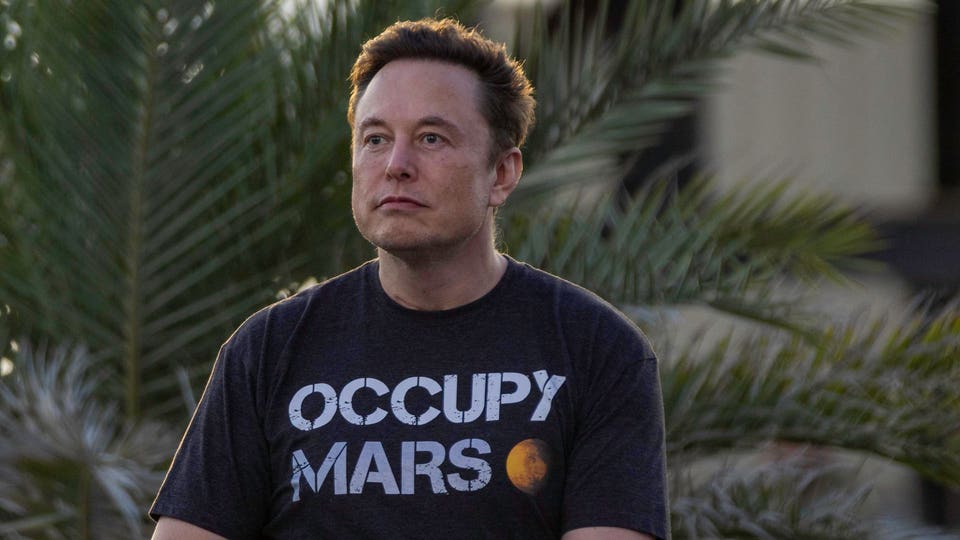
Jay Ritter, a finance professor at the University of Florida and director of its market research program, the IPO Initiative, told Forbes the “Elon Musk effect” is likely to influence SpaceX’s stock, boosting demand for the IPO while adding long-term volatility tied to Musk, as stocks associated with him tend to swing far more significantly than the overall market.
Tesla and SpaceX will be volatile stocks, Ritter said, noting the companies may have “very different outcomes”: Tesla faces headwinds from Chinese competitors, whereas investor optimism for SpaceX is driven by its ability to send satellites and cargo into space cheaper than its rivals.
SpaceX has “substantial downside potential” if it goes public at a valuation of $1.5 trillion or more, according to Ritter, in part because Musk will be granted shares that give him more voting power than other shareholders.
Crucial Quote
“Even if Starlink generates tens of billions of dollars per year in profits [for SpaceX], the money may be squandered on sending people to Mars rather than sending the money to shareholders,” Ritter said.
How Well Do Large Cap Stocks Perform After Ipos?
Some of the largest IPOs in recent decades soared in value over the course of the year after their debut: Meta, which opened trading as Facebook in 2012, rose by 31% over the following 12 months. Alibaba, which set the record for the largest IPO in history when it was publicly listed in 2014, jumped 30% over 12 months, while Uber increased by 21% after listing in 2019. Tesla, which debuted in 2010 at a roughly $1.7 billion market valuation, jumped 40% on its first day and has since skyrocketed by more than 32,000% as of Monday, ranking Musk’s automaker the ninth-largest company in the world.
Key Background
SpaceX’s IPO is expected to value Musk’s aerospace firm at $1.75 trillion and raise $75 billion, which would more than double Saudi Aramco’s $29 billion debut in 2019 as the largest-ever IPO. The listing would allow investors to hold stakes in both SpaceX and Musk’s xAI, which SpaceX acquired in February in a deal that valued the combined entity as an estimated $1.25 trillion. Musk was previously hesitant to take SpaceX public in 2013, telling staffers he took Tesla public because he “didn’t have any choice,” but Musk now likely seeks more funding to boost his xAI among competitors OpenAI and Anthropic. He also plans to develop the first data centers in space, the Journal reported.
What To Watch For
Musk will likely become the first trillionaire following SpaceX’s stock debut. He’s the wealthiest person in the world by a massive margin, with an estimated net worth of $802.9 billion as of Monday, and Musk’s fortune was the first to cross the $400 billion, $500 billion, $600 billion, $700 billion and $800 billion thresholds. He holds an estimated 43% stake in SpaceX, all but guaranteeing his net worth rising above $1 trillion when it publicly debuts. Musk’s compensation package at Tesla could be worth close to $1 trillion as well, but it requires the company to achieve several ambitious stock and sales goals over the next decade.
Further Reading
Please first to comment



Stay Connected
Tweets by elonmuskTo get the latest tweets please make sure you are logged in on X on this browser.